T-22B and When You Need It
You've just invested in a fantastic side-by-side or utility vehicle for your Georgia adventures, or maybe you've had one for years and are now looking into the new MPOHV registration. Suddenly, you hear whispers about a "T-22B" form. What in the world is it, and do you really need another piece of paper to deal with? This guide will cut through the confusion and explain exactly what the Georgia T-22B form is, when it's required, and how to navigate the process so you can get your machine registered without unnecessary headaches.
What Exactly Is the Georgia T-22B Form?
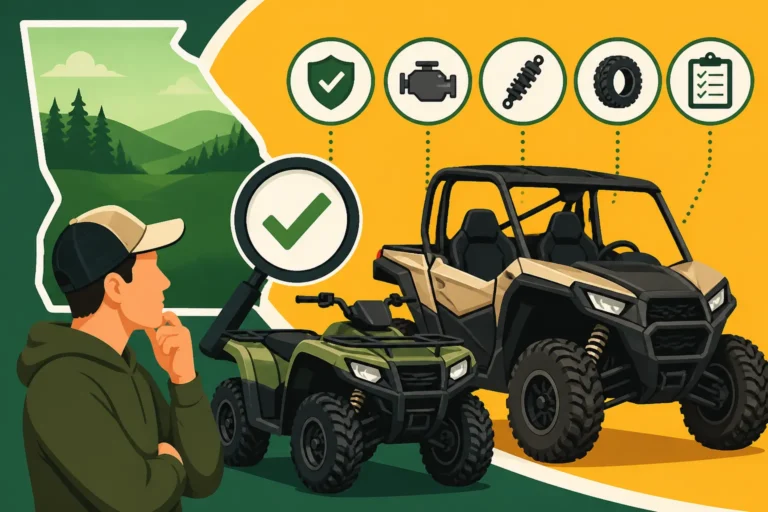
The Georgia T-22B form is officially known as the "Motor Vehicle Identification Number (VIN) Inspection Form." That might sound a bit dry, but its purpose is anything but trivial when you're trying to get your off-road machine officially recognized in the state. In essence, it's a document designed to confirm the identity of your vehicle, specifically its Vehicle Identification Number. Think of it as a fingerprint verification for your side-by-side or ATV, ensuring that the machine you say you own is indeed the machine in front of the inspector, and that its identity hasn't been tampered with.
More Than Just a Basic Inspection
It’s crucial to understand that the T-22B is not a safety inspection to make sure your brakes work or your tires are in good condition. While your machine still needs to meet certain operational requirements for [Georgia MPOHV Eligibility: The Eight-Point Test], the T-22B has a much narrower, but equally important, focus. Its primary goal is to verify that the VIN on the machine matches the VIN on your ownership documents and that the VIN itself appears legitimate and untampered.
Imagine you've just bought a used side-by-side from a private seller. You have a bill of sale, and it seems like a great deal. But when you go to register it at the county tag office, they look at your paperwork and, because Georgia doesn't title ATVs and UTVs in the traditional sense, they need an extra layer of assurance about the machine's identity. This is where the T-22B steps in. It's the state's way of guarding against stolen vehicles or those with altered identification, especially since a conventional title isn't always part of the transaction for these types of machines.
Who Can Complete a T-22B?
This isn't a form you can just fill out yourself or have any old mechanic sign off on. The state of Georgia is quite specific about who is authorized to complete a T-22B. This restriction is in place for a very good reason: to maintain the integrity of the verification process and prevent fraud. Authorized individuals generally include:
- Licensed Georgia Motor Vehicle Dealers: If you're buying a machine from a dealership, they might be able to help you with this form, or at least guide you through the process.
- Law Enforcement Officers: This often includes local police, county sheriff's deputies, or Georgia State Patrol. They are trained to identify legitimate VINs and spot signs of tampering. Many people find it convenient to ask their local sheriff's office if a deputy can come out to inspect their machine.
- County Tag Office Personnel: In some specific cases, personnel at the county tag office may be authorized to complete the inspection, though this often depends on the individual office's policies and resources. It's always a good idea to call ahead to your specific county tag office to inquire.
- Georgia Department of Revenue Investigators: These are the ultimate authorities for VIN verification, often involved in more complex cases of suspected fraud or extensive damage to a VIN.
The process typically involves the authorized individual physically examining the VIN plate or stamp on your machine. They'll compare it against any existing paperwork you have (like a bill of sale or previous registration), ensure it's securely attached, and look for any signs that it might have been altered or swapped. Once they've confirmed the VIN's legitimacy, they'll complete and sign the T-22B form, which then becomes a critical document in your [Georgia County Tag Office Steps for an MPOHV] for registration.
When Does the Georgia Department of Revenue Require a T-22B?
Understanding when you need a T-22B is key to avoiding delays in your registration process. It's not a universal requirement for every MPOHV transaction, but it certainly pops up in several common scenarios, especially when the tag office needs extra assurance about your machine's identity and legitimate ownership.
Registering a Machine Without a Title
This is, by far, the most common reason you'll encounter the T-22B form. Georgia, unlike many states, does not issue traditional motor vehicle titles for ATVs and UTVs. This means when you purchase or acquire one, you're not getting a state-issued document that definitively proves ownership in the same way you would for a car or truck. Because of this gap, when you go to register your machine as a [Georgia MPOHV Registration Explained], especially if it's for the first time, the Department of Revenue wants to be extra sure that the machine isn't stolen or misrepresented.
Consider this: You bought a used side-by-side from an individual who only provided a handwritten bill of sale. While that bill of sale is crucial for [Proving You Own an ATV in Georgia Without a Title], it's still just a piece of paper between two private parties. The T-22B provides an official, third-party verification that the VIN on that bill of sale truly belongs to the machine you're attempting to register. It adds a layer of governmental oversight to a transaction that, for these types of vehicles, lacks the traditional security of a state-issued title. This helps ensure that the voluntary [Georgia MPOHV Registration Is Voluntary] process maintains its integrity.
Dealing with Serial Number Issues or Missing Paperwork
Sometimes, the situation is a little more complicated than just lacking a title. What if the VIN on your machine is damaged, rusted, or otherwise illegible? Or what if, through no fault of your own, some of the previous ownership paperwork has been lost or is incomplete, leaving a gap in the chain of custody? In these scenarios, the tag office will almost certainly request a T-22B.
For example, you might have inherited an older quad from a family member, and over the years, the VIN plate on the frame has become corroded to the point where the numbers are impossible to read clearly. Or perhaps you're trying to register a machine for which the previous owner simply had no documentation whatsoever, leaving you with little to prove its origin. In these instances, the T-22B becomes essential. An authorized inspector will attempt to locate and verify the VIN, potentially even digging for secondary VIN locations, and then certify its authenticity on the form. This is particularly important for situations detailed in [Georgia Registration When the Serial Plate Is Gone]. Without this verification, the tag office would be unable to confidently assign a registration to a machine with an unidentifiable or questionable VIN.
Branded Certificates of Registration
Another instance where the T-22B might be required is when dealing with machines that have a "branded" history. In Georgia, a branded certificate of registration for an MPOHV might be issued if the machine has been salvaged, rebuilt, or has a similar history that the state wants to make transparent. These brands are essentially warnings to future owners about the machine's past, and a [What a Branded Registration Warns You About] can include things like flood damage or major repairs.
When you're attempting to register a machine that falls into this category, or if the tag office suspects it might, a T-22B inspection can be a critical step. The inspection helps confirm that the machine's identity, despite its history, is currently sound and hasn't been compromised. It ensures that the VIN matches the branding history and that the machine presented for registration is indeed the one associated with that branding. This can be a particularly important step for [Law Enforcement Inspection for a Branded Plate] before the branded certificate is issued or updated. It adds a layer of diligence to protect both the state and potential buyers from unknowingly acquiring a machine with a problematic past or one that has been fraudulently misrepresented after a salvage event.
| Situation | T-22B Likely Needed | T-22B Likely NOT Needed |
|---|---|---|
| First-time MPOHV registration for a used machine with only a Bill of Sale | Yes | No |
| VIN plate is damaged, unreadable, or missing | Yes | No |
| Previous ownership paperwork is incomplete or missing | Yes | No |
| Machine has a "branded" history (e.g., salvage, rebuilt) | Yes | No |
| You are simply renewing an existing MPOHV registration | No | Yes |
| Registering a brand-new machine from a licensed dealer with clear MCO/MSO | No | Yes |
| Transferring an MPOHV registration with a clear previous Georgia registration | No | Yes |
The T-22B Process: What to Expect
Navigating the T-22B process doesn't have to be daunting if you know what steps to take and what to expect. A little preparation can go a long way in making this part of your [How to Register a UTV in Georgia] journey smooth.
Before You Go: Preparation is Key
The more prepared you are, the smoother the inspection will likely be. Your first step should be to gather all relevant ownership documents you possess. This includes:
- Your Bill of Sale: Even if it's a simple handwritten one, it's essential. It provides a starting point for the inspector to verify the VIN against. For private sales, a detailed bill of sale is crucial.
- Previous Registration Documents: If the machine was previously registered in Georgia or another state (even if not titled), bring those papers. They can help establish a chain of ownership.
- [Georgia Ownership Affidavit for an MPOHV]: If you're using this affidavit to declare ownership, have it ready.
- Any Other Supporting Documents: This could include old insurance cards, repair receipts with VINs listed, or any other paper trail that links you to the machine.
Next, ensure your machine is easily accessible for inspection, especially the area where the VIN is located. VINs are often found on the frame, usually near the front suspension or steering column, but locations can vary by manufacturer. Take the time to clean off any mud, dirt, or debris that might obscure the numbers. An inspector won't appreciate having to dig through layers of grime to read a VIN, and it could delay the process.
Finally, you need to decide who will perform the inspection. As mentioned, authorized personnel include licensed dealers, law enforcement, or in some cases, county tag office staff. Call your local sheriff's department or police department's non-emergency line to inquire about their process for VIN inspections for MPOHVs. Some departments might have specific days or times for inspections, or they might send a deputy to your location. If you purchased from a dealer, ask if they offer T-22B services.
During the Inspection: What They Look For
When the authorized inspector arrives or you bring your machine to them, their primary focus will be on the Vehicle Identification Number itself. They will:
- Locate the VIN: They'll physically find the VIN stamped on the frame or a permanent plate attached to the machine.
- Verify the Numbers: They'll meticulously compare the VIN on your machine to the VIN listed on your bill of sale, affidavit, or any other supporting documents. Accuracy is paramount here.
- Check for Tampering: This is a critical part of their job. They'll look for any signs that the VIN has been altered, restamped, removed, or replaced. This could include grinding marks, misaligned numbers, or rivets that don't look factory original. This step is particularly important in preventing the registration of [Stolen Machine Databases and the Check].
- Complete the Form: Once satisfied, the inspector will fill out the T-22B form, noting the machine's make, model, year, and the verified VIN. They will also provide their identifying information and signature, certifying that they performed the inspection.
A common scenario might involve a local deputy coming to your property. They'll ask to see your paperwork, then carefully examine your side-by-side or UTV. They might take photos as part of their department's protocol. Be prepared to answer questions about where you acquired the machine and its history. This isn't an interrogation; it's part of their due diligence to ensure everything is above board.
Submitting the Completed Form to the County Tag Office
Once you have a fully completed and signed T-22B form in hand, it becomes an indispensable part of your registration application. You will submit this form along with your other required documents to your local county tag office. These documents will typically include:
- Your Bill of Sale or [Georgia Ownership Affidavit for an MPOHV]
- Proof of Georgia residency (e.g., driver's license, utility bill)
- Proof of [Georgia Liability Insurance Tied to Registration]
- Payment for [Georgia MPOHV Registration Cost]
The T-22B essentially serves as an official endorsement of your machine's identity. Without it, especially if you fall into one of the categories where it's required, the tag office simply won't have the necessary verification to process your [Georgia MPOHV Registration Explained]. They need that official stamp of approval on the VIN to ensure they're registering a legitimate vehicle. Imagine the frustration of getting all your other paperwork in order, only to be turned away because you missed this crucial step. It's a key piece of the puzzle, providing the necessary legitimacy and verification for an MPOHV that lacks a traditional title.
Avoiding Pitfalls and Common Misconceptions
The T-22B process, while straightforward once you understand it, can lead to confusion and delays if you're not aware of some common pitfalls and misconceptions. Knowing these can help you sail through your MPOHV registration.
Not Every Machine Needs It
This is a big one. Many new MPOHV owners or those looking into registration for the first time might assume every off-road vehicle needs a T-22B inspection. That's simply not true. If you're buying a brand-new side-by-side from a licensed Georgia dealer, for example, your Manufacturer's Certificate of Origin (MCO) or Manufacturer's Statement of Origin (MSO) typically provides all the necessary VIN verification. The dealer has already processed the initial identity checks.
Similarly, if you're merely renewing an existing [Georgia MPOHV Renewal Each Year], you typically won't need a new T-22B, unless there's been some reported issue with the VIN or ownership since your last registration. The T-22B is primarily for those initial registrations, especially for used machines with less formal ownership documentation or any scenario where the VIN's integrity needs extra scrutiny. It's an initial hurdle for specific situations, not an annual rite of passage. Ensure your machine meets all the [Georgia ATV Registration Requirements] before you even consider the T-22B.
The Cost and Time Involved
While the state of Georgia doesn't charge a specific fee for the T-22B form itself, the entity or individual performing the inspection might charge for their services. This is an important distinction.
- Licensed Dealers or Mechanics: If you take your machine to a dealer or a certified mechanic who is authorized to complete the T-22B, they will almost certainly charge you a service fee for their time and expertise. This fee can vary significantly, so it's always best to call ahead and ask about their T-22B inspection fees.
- Law Enforcement: Many county sheriff's departments or local police departments offer VIN inspections as a public service, sometimes for free. However, this isn't universally guaranteed, and their availability can be limited. You might have to wait for an appointment or adjust your schedule to match theirs. Some departments might charge a nominal administrative fee. It's crucial to call your local department and ask about their specific policy, availability, and any associated costs.
- Georgia Department of Revenue Investigators: While they perform T-22B inspections, they are typically involved in more complex or problematic cases and aren't usually the first point of contact for a routine registration.
Beyond monetary cost, consider the time investment. You'll need to coordinate with the inspector, which might involve scheduling an appointment, taking time off work, and transporting your machine if the inspection isn't done at your location. Factor this into your overall timeline for [Georgia MPOHV Registration Processing Time] to avoid any last-minute rushes.
T-22B vs. a Full Safety Inspection
We touched on this earlier, but it's worth reiterating due to common misunderstanding. The T-22B is not a comprehensive safety inspection that certifies your off-road machine is roadworthy in all aspects. It's purely an identity verification form. It confirms the VIN. It doesn't check your brake pads, headlight alignment, or the strength of your frame.
While your machine does need to meet certain operational requirements to be registered for limited road use as an MPOHV, such as having [Headlights, Brake Lights and Mirrors on the Checklist], the T-22B form doesn't certify these components are working. That responsibility rests with you, the owner. The county tag office will review your affidavit or other documents where you declare that your machine meets these requirements. Think of the T-22B as verifying who your machine is, not how well it operates. This distinction is vital for setting proper expectations and ensuring you address all necessary aspects of your MPOHV registration.
Disclaimer
This article is for general informational purposes only and does not constitute professional advice. Laws, prices and regulations vary by location and change over time. Consult a qualified professional for guidance on your specific situation.