Handicap Placards and Closed Roads
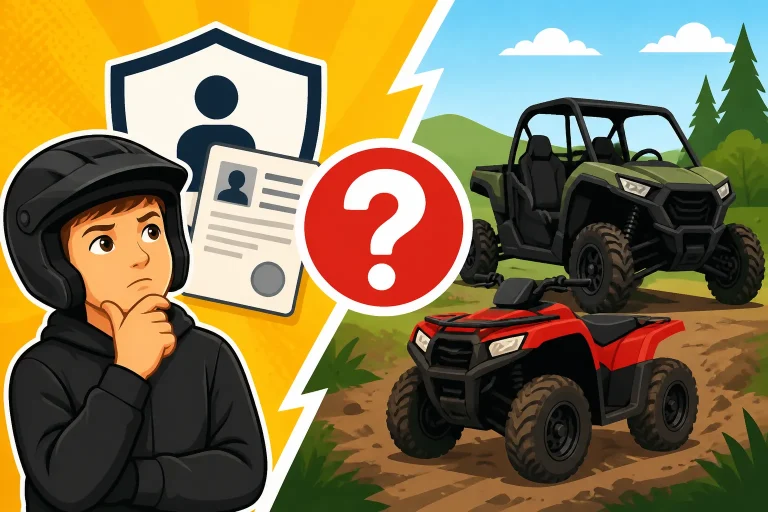
A Georgia disability parking placard can help with accessible parking, but it does not automatically authorize an ATV or UTV on a road or trail that is closed to that machine. The key is to separate parking privileges from riding access, then check who manages the route, what vehicles it allows, and whether a permit is required.
What a handicap placard does and does not allow
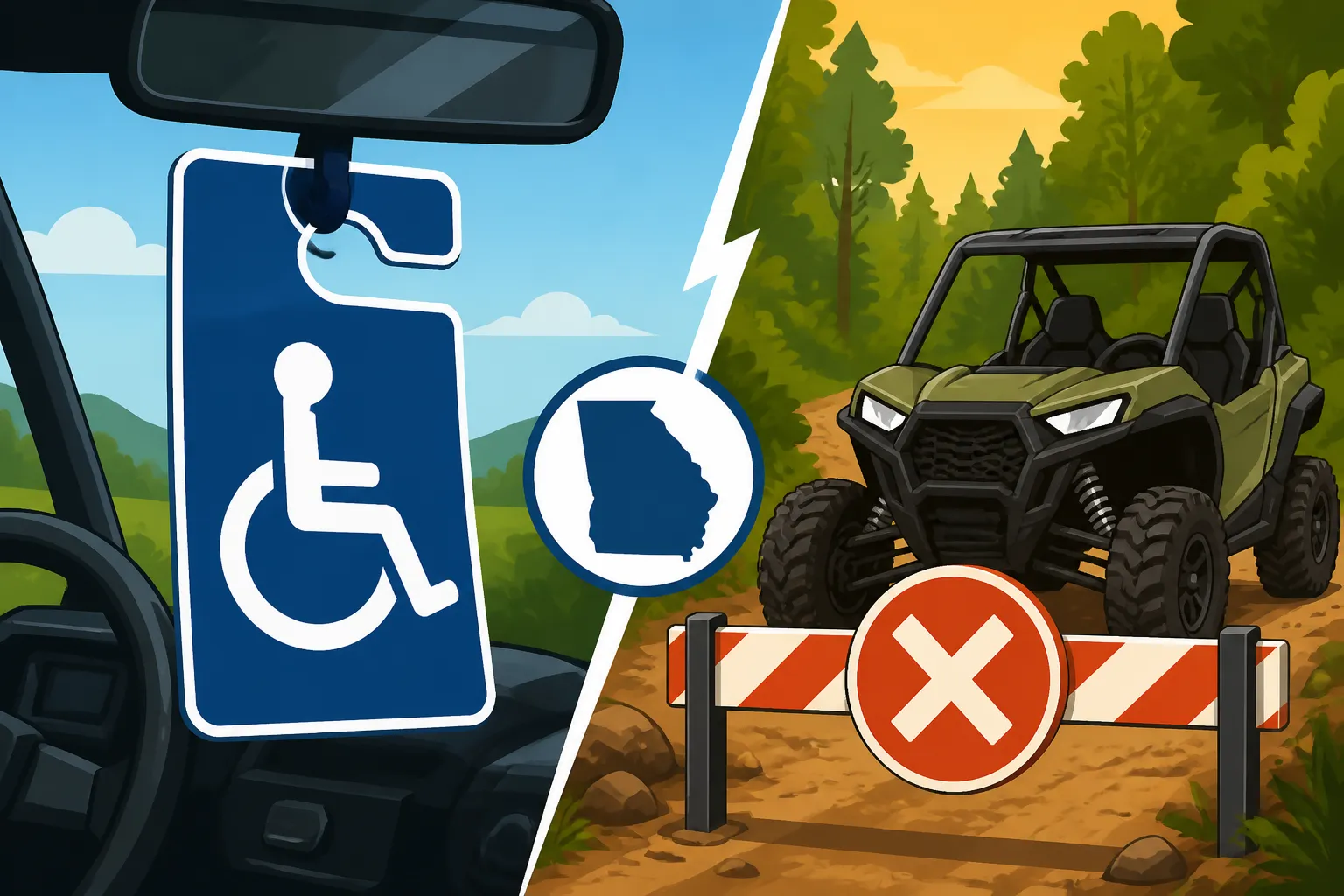
A disability parking placard is for parking accommodations under applicable parking rules. It is not an off-road vehicle permit, a trail pass, or an exception to a road closure. Having a placard in your vehicle—or carrying one while riding—does not by itself change which roads or trails are open to your ATV or UTV.
That distinction matters because “road access” can refer to several different things:
- Accessible parking: A designated parking space may be available to a person who qualifies under the relevant rules.
- A route open to motor vehicles: A road may allow some vehicles but exclude ATVs, UTVs, or other off-highway machines.
- A designated OHV route: A trail or road may be open only to the vehicle types specified by its managing agency.
- A closed road: A gate, sign, seasonal restriction, or land-management order may prohibit motorized travel.
- Private property: Access depends on the owner’s permission and any conditions they set.
A placard does not turn a closed route into an open one, remove a vehicle restriction, or replace permission from a landowner. Likewise, an OHV permit does not necessarily authorize travel on a public road or a route that is closed to your machine.
This is why it helps to treat parking and riding as separate checks. You might be allowed to park in an accessible space near a riding area but still need to trailer your machine to a designated route. Or a trailhead may be open while a particular road within the area is closed. Always follow posted signs and the directions of the agency or property owner responsible for that route.
If you are sorting out what an OHV permit covers, start with Georgia OHV Permits: What You Need Before You Ride. A permit can satisfy a permit requirement, but it is not a general pass to ride wherever a vehicle can physically fit.
Why a closed road stays closed
A road can be closed for reasons that have nothing to do with whether a rider has a disability. The restriction may protect public safety, wildlife, soil, water, nearby residents, or road infrastructure. It may also reflect the type of vehicle the route was designed to accommodate.
For example, a route may be closed to motorized use altogether, open only to highway-licensed vehicles, or open to off-highway vehicles only when specifically designated. A gate may mark a seasonal closure, an access restriction, or the end of public motorized access. Driving around a gate or past a closure sign can still be a violation even if the road appears passable and there is no obvious physical barrier.
In a national forest riding area, the key question is not simply whether a route looks like a road. It is whether the managing agency allows your type of machine on that route. Some routes are designated for OHV use, while others are not. The Georgia National Forest Trail-Only Rule explains why being inside a national forest does not mean every road or track is open to an ATV or UTV.
Rules can also differ between nearby parcels. A forest trail, a Wildlife Management Area road, a county road, and a private timber road may each have different managers and restrictions. A route that is open on one side of a boundary may be closed on the other. The Georgia WMA Rules for ATV Riders are a useful reminder that Wildlife Management Areas can have their own conditions for when and where vehicles may be used.
Do not assume a closure is temporary just because it looks temporary. A gate can be part of a long-term restriction, and a route that is open to pedestrians may remain closed to motor vehicles. Before riding, check current official notices for the specific riding area and read signs at the entrance and along the route. If the route’s status is unclear, stop and ask the land manager instead of treating uncertainty as permission.
A placard does not change any of those factors. Nor does the rider’s mobility need automatically establish an exception to a closure. If an accommodation may be needed, ask the agency or property owner directly before the trip. They can explain what options are available and whether a particular access request can be considered.
How to check access before you ride
The simplest way to avoid a frustrating or unsafe trip is to verify the route, vehicle, and permit separately. Use this sequence before you load the machine:
- Identify who manages the land. Find out whether the riding area is managed by a public agency, a county or city, a private park, a hunting club, or a landowner. Different managers can apply different rules.
- Confirm the route is open to motorized use. Look for current closure notices and route-designation information. Do not rely only on a map line, an old social media post, or another rider’s description.
- Check that your machine is allowed. A route may permit some OHVs while restricting others by vehicle type, size, or other conditions. Verify the rules for your exact machine.
- Check the permit requirement. A riding permit may be required even when the route is open. Confirm who needs a permit and what activity it covers. The What an Operator Permit Does Not Cover article explains why a permit should not be treated as permission to ignore other restrictions.
- Ask about accessibility arrangements. Contact the site or land manager ahead of time about accessible parking, facilities, trailhead conditions, and any accommodation request. Ask for clear instructions rather than assuming a placard provides access to a route.
- Recheck shortly before leaving. Closures and conditions can change. Review official notices and trail information for the day you plan to ride.
- Follow signs on arrival. If signs conflict with what you expected, follow the posted restriction and contact the manager for clarification.
Here is a quick way to separate the questions:
| Question | What to verify | What a handicap placard does |
|---|---|---|
| Can I park in an accessible space? | Whether the space and parking rules apply to your situation | May provide parking privileges when used as required |
| Can my ATV or UTV use this road? | Route designation, vehicle rules, and current closures | Does not make a restricted route open |
| Do I need an OHV permit? | The requirements for that riding area and activity | Does not replace a required permit |
| Can I ride on private land? | The owner’s permission and any conditions | Does not grant permission |
| Can the site provide an accommodation? | Ask the responsible manager about available options | May help explain your needs, but is not an automatic route authorization |
For a forest riding trip, check official trail status before towing. A route may be closed because of weather, maintenance, seasonal conditions, or another management decision. Georgia Trail Conditions Before You Drive can help you build that check into your trip planning. For map preparation, Georgia ATV Trail Map Downloads may help you locate a riding area, but a map should not replace current signs or official closure notices.
If you are visiting from another state, do not assume that an out-of-state placard or riding permit changes Georgia access rules. Confirm the relevant requirements with the land manager and review Georgia Visitors From Other States if you need to understand how visitor rules fit into a Georgia riding trip.
Planning an accessible ride without relying on road access
A closed road can change the logistics of a ride, but it does not always mean there is no practical way to visit the area. The useful next step is to ask the site manager what access is available, rather than trying to use a route that is closed.
When you contact the manager, be specific. Explain whether you are asking about accessible parking, the distance from parking to a trailhead, restroom access, an accessible viewing area, or a possible accommodation related to the route. Ask which locations are open to motor vehicles, where you may unload a machine, and whether any restrictions apply to your vehicle or activity.
It can help to have the following details ready:
- The name of the riding area and the date of your planned visit
- Your machine type and any relevant dimensions
- The route or trailhead you hope to use
- The kind of access barrier you need help evaluating
- Whether you need information about parking, facilities, or riding access
Ask for the answer in practical terms. For example: Is the parking area open? Is the trailhead reachable by a highway vehicle? Are OHVs allowed on the route? Is there an accessible facility nearby? Is there a contact number for questions on the day of the visit? These questions are more useful than asking generally whether the area is “handicap accessible,” since a site may have accessible parking but limited access beyond it.
Plan a backup option in case a route is closed or conditions change. That could mean choosing another designated trail, visiting a different facility, or arranging a shorter outing near an accessible area. Never use a closed road as a workaround just because it would make the trip easier. A closure may exist for safety or resource-protection reasons, and unauthorized riding can create problems for you and for future access.
A placard can be an important part of managing parking needs, but it has a narrower role than many riders expect. For Georgia ATV and UTV trips, the dependable approach is to verify accessible parking, route access, machine eligibility, and permit rules as separate questions. If a route is marked closed, the placard does not override that restriction; ask the manager what lawful access options are available.
Disclaimer
This article is for general informational purposes only and does not constitute professional advice. Laws, prices and regulations vary by location and change over time. Consult a qualified professional for guidance on your specific situation.