Georgia Riding Areas That Take Cash Only
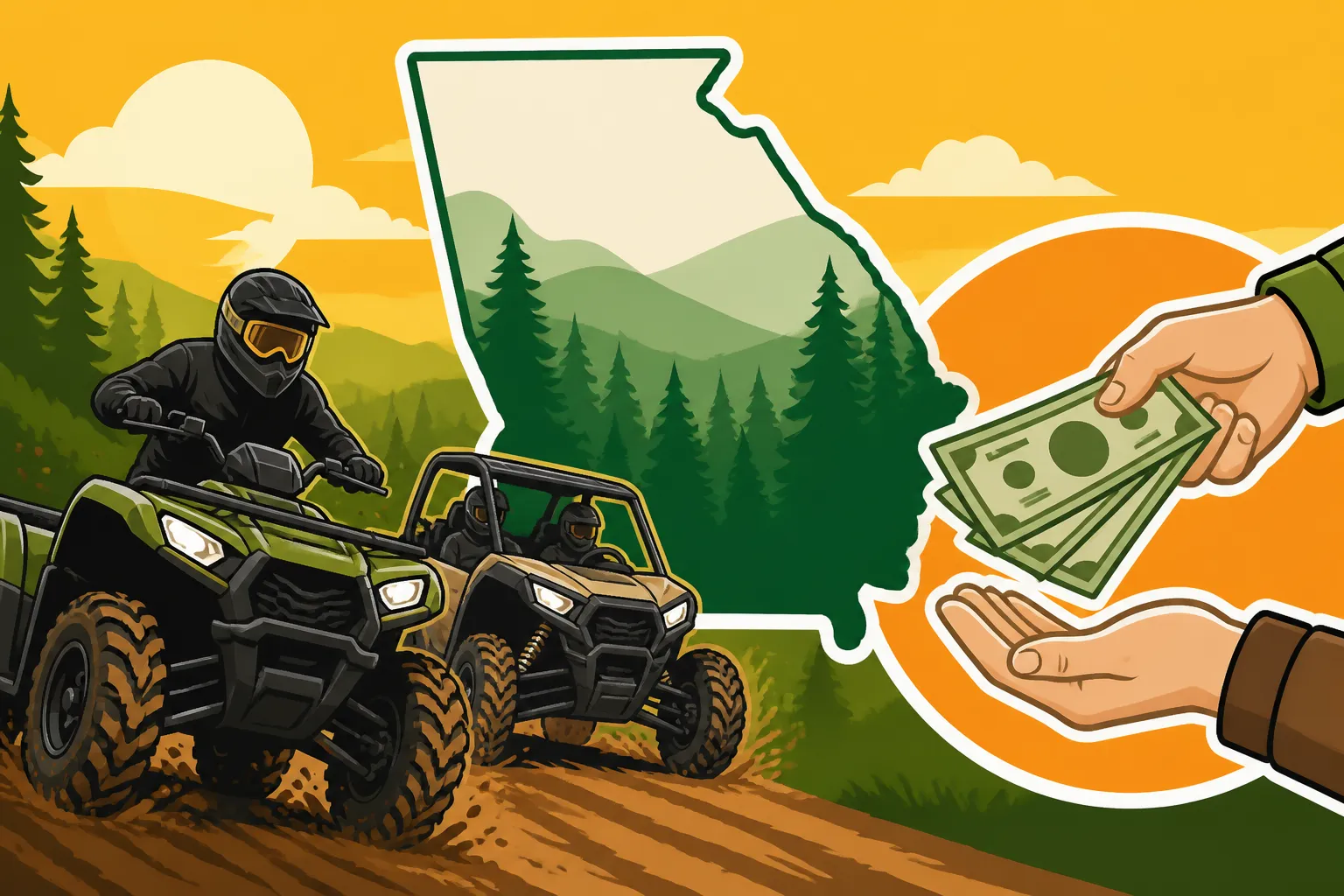
A long drive to a Georgia riding area can turn frustrating fast if the gate, permit seller, or campground accepts cash only and you arrived with just a card. The catch is that payment rules may differ by park, trailhead, and season. This guide explains how to check before you go, where cash-only surprises are most likely, and what to bring.
Why cash-only rules vary across Georgia riding areas
Private parks set their own payment policies
Private off-road parks control their own admission, camping, rental, and event procedures. A park may take cards at one point of sale but require cash for a smaller transaction, such as a snack, firewood, or an informal event fee. A special event may also operate differently from a regular riding day.
That means a rider cannot safely assume that one payment method works everywhere on the property. A private riding park near a popular route may have a staffed office, while another venue may use a check-in booth or a payment process that depends on the day. If you are planning to visit places such as Iron Mountain Resort or Highland Park, contact the venue directly and ask about the specific fees you expect to pay. Their policies are not interchangeable just because both are off-road parks.
Ask a practical, detailed question rather than only asking, “Do you take cards?” For example: “Can I pay admission, camping, and any riding permit by card when I arrive, or should I bring cash for any of those?” If you are bringing a group, ask whether each rider pays separately or one person can handle the full transaction. That helps avoid an awkward scramble at check-in.
For a broader look at the differences between venues, see [Georgia Private Off-Road Parks Compared]. The important point is that an individual park’s payment policy belongs to that park; a statewide assumption will not protect you from a cash-only gate or service.
Public trail systems and private parks may handle fees differently
Georgia’s public OHV trail systems and private riding parks are not the same kind of destination. Public trail access may involve a permit process, while a private park typically sets its own admission and facility fees. Payment accepted by a permit vendor does not necessarily mean that a nearby business, campground, or private park will accept the same methods.
If you are headed toward a national forest riding area, check the permit requirements and purchase options before leaving home. The [Georgia's Day and Annual Forest OHV Permits] guide can help you understand the permit side of the trip, while [Where Georgia Riders Buy a Forest Permit] covers where riders may look for purchase options. Do not rely on the assumption that a trailhead will have a staffed payment counter or that a cash payment at the entrance will substitute for a required permit.
A kiosk can add another wrinkle. Some trail fees or permits may be handled through a kiosk or other designated process, and the equipment or payment options available at one location may not match another. Read [Georgia Trail Fees Paid at a Kiosk] before counting on a kiosk as your backup plan. If a kiosk is out of service, has no attendant, or cannot handle the payment method you brought, having checked the official instructions ahead of time can save a long detour.
A cash-only sign may apply to one fee, not the whole visit
“Cash only” can refer to one transaction rather than every service on the property. A park might have separate payment arrangements for admission, camping, rentals, merchandise, or food. A campground connected to a riding destination may also have its own check-in process. Ask about each part of your visit instead of treating the sign as a complete description of every payment option.
This matters especially if your trip includes more than riding. Imagine you arrive with enough cash for admission, then discover that you also need to pay for camping, a shower, or an extra vehicle. Or perhaps the park accepts a card for admission but a nearby vendor does not. A quick call can clarify which costs need cash and whether the venue has an ATM nearby. Do not assume that an ATM will be available, working, or convenient.
If the venue has a published website or social media page, check it shortly before departure, then call if the details are unclear. For a long weekend near Dalton or Chatsworth, a short confirmation can be worthwhile: plans, staffing, and payment procedures may change for events or busy periods. The best answer is the one from the office or operator handling check-in for your visit.
How to confirm payment before you leave
Ask about every part of the trip
Before packing, make a simple list of everything you may need to pay for. Include riding access, permits, camping, rentals, events, food, and any extra vehicle or trailer charges. Then contact the relevant park, permit provider, or campground and ask which methods are accepted for each item.
A useful call or message can be specific:
- “I’m planning to ride on this date. Is the riding fee cash-only, or can I use a card?”
- “Are camping and any event fees paid separately?”
- “Can I pay in advance, or must I pay at check-in?”
- “Is there an ATM on site, and is it accessible when the office is closed?”
- “If the payment system is unavailable, what should I do?”
Record the answer and the date you received it. That is particularly helpful if you are organizing a group ride. You can tell everyone what to bring instead of relying on one person to front the cost for the whole group.
For forest riding, verify the permit process separately from the local trailhead details. [Georgia Permits on Recreation.gov] may help you review an online purchase route, but do not assume that an online permit purchase covers private-park admission, camping, or other fees. They are separate parts of planning, and each may have its own payment rules.
Use maps for navigation, not payment confirmation
A mapping app can help you plan a route, identify nearby services, and avoid arriving at the wrong entrance. It cannot reliably tell you whether a venue accepts cash or cards today. Confirm payment details with the park or agency directly, and use maps as a supporting tool rather than proof of operating policy.
onX Offroad can be useful for organizing an off-road route and checking the surrounding area before you drive. It may help you think through where the trailhead is relative to a town or fuel stop, but it should not replace a call about payment, permits, operating status, or access rules. A route line on a map is not confirmation that a gate is open or that a particular road is available to public riding.
Use onX Offroad alongside official maps and the destination’s own guidance. If you are planning a trip to a forest trail system, the [Georgia ATV Trails: Where You Can Legally Ride] guide can help you distinguish designated riding areas from places where riding is not allowed. For day-of planning, check [Georgia Trail Conditions Before You Drive] as well, since access and trail conditions can affect whether the trip makes sense even after you have settled the payment question.
Build a backup plan for service gaps
Rural riding areas may be some distance from a bank, ATM, or full-service store. Mobile coverage can also be unreliable, which makes it difficult to find a last-minute cash machine or contact the venue once you are close. If the operator confirms that cash may be needed, withdraw it before leaving a larger town rather than waiting until you reach the trail area.
Do not carry your entire trip budget in one easily accessible place. Keep the amount needed for known fees separate from emergency cash, and store it securely. If several people are traveling together, agree in advance who is paying for shared expenses and how the group will settle up. This avoids confusion at a gate when everyone is focused on unloading machines and getting checked in.
If a payment method fails, do not ride through a closed gate or treat a trail sign as optional. Contact the operator or the relevant agency for instructions. Having the destination’s phone number saved before you lose cell service is a small step that can prevent a much bigger problem.
What to bring when a Georgia riding area may take cash
Prepare a payment kit for the ride
A practical payment kit does not need to be complicated. Bring enough cash for the fees the venue has confirmed, plus a modest cushion for an unexpected separate charge. Carry a card as well, even when you expect to pay cash. That gives you options if one payment method is unavailable or a fee turns out to be handled differently than expected.
Keep payment items protected from rain, mud, and dust. A sealed pouch or wallet stored away from loose riding gear is more reliable than cash tucked into a pocket that may be opened repeatedly. If you are riding in a group, avoid keeping everyone’s money in one person’s unprotected bag.
Consider the whole route, not just the entrance. You may need to pay for fuel, food, ice, or a campsite on the way to or from the riding area. If you are traveling through smaller communities, check in advance whether the services you plan to use are open and what payment methods they accept. A destination’s cash-only policy is only one part of the trip budget.
Keep permits, receipts, and contact details together
Bring the documentation required for the place you intend to ride. Depending on the destination, that may include a permit, booking confirmation, waiver information, or proof of payment. Save digital copies on your phone and keep a paper backup where practical, especially if you expect weak service.
Keep receipts for fees and purchases until the trip is over. A receipt can help clear up a misunderstanding about whether a fee was paid or which transaction it covered. If you are buying a permit online, make sure you know how the permit must be shown or carried before you arrive. A confirmation email and a valid permit are not always the same thing.
For information about what permits do and do not cover, see [What an Operator Permit Does Not Cover]. A permit for one type of access should not be treated as blanket permission for every nearby trail, private property, or facility.
| Trip item | What to confirm before departure | Useful backup |
|---|---|---|
| Private park admission | Whether the park takes cash, cards, or both | Cash for the confirmed fee and a payment card |
| Forest OHV permit | Where to buy it and how to display or carry it | Saved confirmation and an offline copy |
| Camping | Whether camping is paid separately from riding | Cash or card based on the campground’s instructions |
| Rentals or events | Whether advance payment is required | Booking details and the venue’s phone number |
| Food, fuel, and supplies | Which services are available near the riding area | Cash for small purchases and a card |
Check the route and arrival logistics too
Payment planning is most useful when it fits into a complete arrival plan. Check where you are supposed to enter, whether there is room to turn around with a trailer, and where you can park while handling check-in. A cash-only entrance becomes more stressful if you arrive at the wrong gate with a trailer and have to back out onto a narrow road.
The [Georgia Trailheads With Trailer Parking] guide can help you think through trailer access as part of trip planning. Check directions with the riding area itself, especially when a map app suggests a route that may not be appropriate for a truck and trailer. Save the destination’s instructions before you leave, in case the final stretch has poor reception.
If your plans include more than one riding area, confirm payment rules for each one separately. A public forest trail system, a private park, and a campground can all have different procedures, even when they are within the same general region. Make a short note of the fee, payment method, permit status, and contact details for each stop. That small bit of organization makes arrival calmer and leaves more time for the reason you made the drive: riding.
A simple pre-trip checklist for cash-only surprises
The day before you go
Recheck the venue’s current arrival instructions and payment methods. Confirm whether there are special hours, an event, or a reservation requirement that could affect how you pay. If you are relying on a permit seller or kiosk, verify the process and do not assume you can resolve a problem at the trailhead.
Check that your cash is accessible but secure, and that your card is available as a backup. Download or save directions, permit details, reservation information, and the operator’s phone number. If you are meeting friends, send them the payment plan so nobody arrives expecting another person to cover an unexpected fee.
This is also a good time to check whether the riding area is open and suitable for your machine. Payment readiness does not guarantee that a trail is open, that a machine fits the system, or that a particular route is legal. Confirm those details independently before you load up.
At the entrance
Follow posted instructions and pay through the designated process. If a sign says cash only but you do not have enough, ask staff or contact the operator for an approved solution. Do not assume that another visitor’s arrangement applies to you, and do not proceed into a restricted area while trying to sort out payment later.
Keep your permit and proof of payment available in the way the venue requires. If you are uncertain whether a charge covers the rider, the machine, or the whole group, ask before heading out. A quick clarification at check-in is easier than trying to reconstruct the transaction after a long ride.
Cash-only policies are a manageable part of planning when you verify them early. Check directly with each destination, separate permit costs from park and camping fees, and carry a practical backup. That way, a payment surprise is less likely to derail a day on Georgia’s trails.
Disclaimer
This article is for general informational purposes only and does not constitute professional advice. Laws, prices and regulations vary by location and change over time. Consult a qualified professional for guidance on your specific situation.