Georgia Trails Near Macon
Macon riders often expect to find a public ATV trail system just outside town, then discover that nearby forests, wildlife areas, and dirt roads do not automatically allow recreational riding. This guide explains which options are worth investigating, how to plan a longer trail day, and what to check before loading a machine so your trip does not end at a closed gate.
What to expect when looking for ATV trails near Macon
Why nearby public land is not automatically riding land
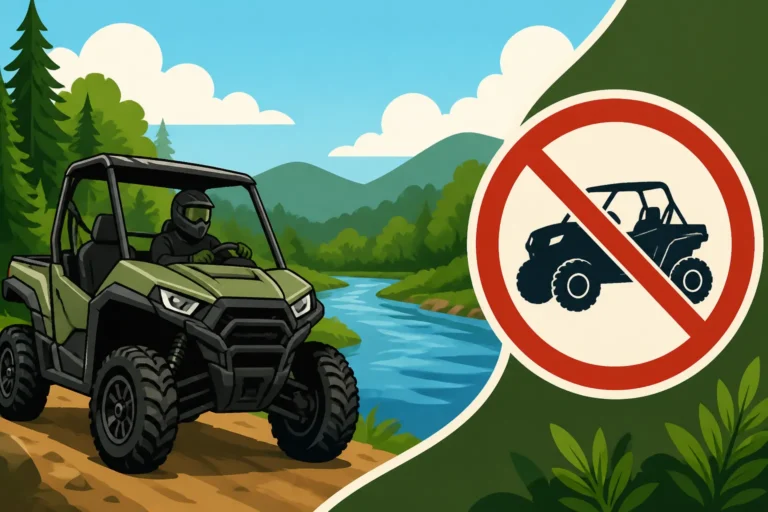
Macon sits in a useful spot for reaching different parts of Georgia, but that does not mean every patch of woods or unpaved road around town is open to ATVs and UTVs. A dirt road may be privately owned, closed to motor vehicles, reserved for property access, or subject to rules that allow only specific uses. Even on public land, motorized riding is generally limited to roads or trails designated for that kind of use.
That distinction matters around places such as the Ocmulgee River corridor and nearby wildlife areas. A hiking path, hunting access road, or forest road is not automatically an ATV trail. Before riding, check the rules for the specific property and route, including seasonal closures and vehicle-width restrictions. [Georgia ATV Rules on Private Property] explains why permission and land boundaries matter even when a track looks easy to follow.
The realistic choice: a private park or a longer drive
For a dedicated trail day, Macon riders may need to choose between a private off-road park and a longer drive to a designated riding area. A private park can be the more straightforward option if it offers the type of riding you want and accepts your machine. A public OHV system may suit riders who prefer forest trails, but Georgia’s established national forest OHV systems are concentrated in the north of the state, making them a substantial outing from central Georgia.
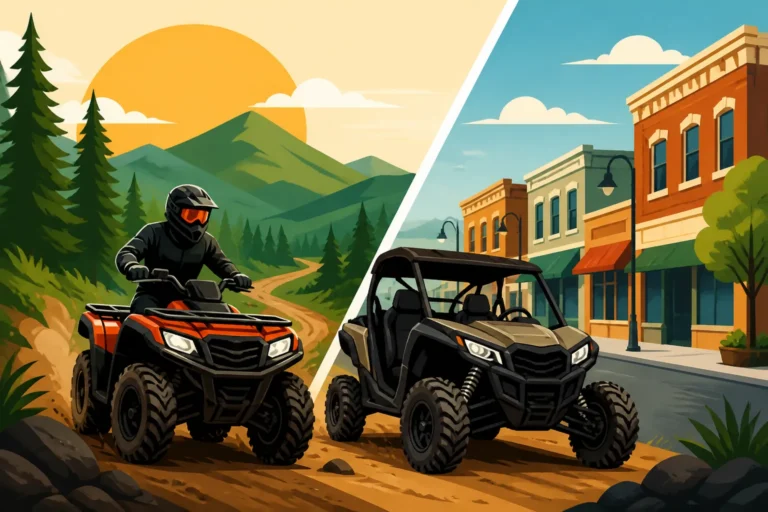
Do not choose a destination based on a map pin alone. Confirm that the property is open to the public, that your machine is allowed, and that the advertised trails match your riding style. The distinction between trails for ATVs, side-by-sides, dirt bikes, and full-size 4x4s can be important. [Georgia ATV Trails: Where You Can Legally Ride] offers a useful starting point for sorting legal riding areas from roads and paths that only look rideable.
A quick comparison of the main trip types
The right destination depends on how much driving you are willing to do and what kind of ride you want. A closer private property may be more convenient, while a well-established forest OHV system can offer a more structured trail network but require more planning.
| Option | What it may suit | What to verify before leaving |
|---|---|---|
| Private off-road park | Riders seeking an organized riding property and varied terrain | Current operating status, machine types, riding rules, hours, fees, and reservations |
| North Georgia national forest OHV system | Riders willing to travel for designated forest trails | Trail openings, vehicle-width limits, permit requirements, weather closures, and access conditions |
| Local dirt or forest road | Riders with written permission or a clearly authorized route | Land ownership, road designation, allowed vehicle use, and any seasonal restrictions |
| Motocross facility | Riders looking for a track-based experience | Whether ATVs are accepted and whether the facility offers trails or track riding only |
Treat this table as a planning framework, not confirmation that a particular site is open or suitable. A call or official property update can prevent a long drive for a closed park, an incompatible machine, or a trail system that does not allow your vehicle.
Private riding options worth researching
Highland Park Off-Road Resort
Highland Park Off-Road Resort near Cedartown is one Georgia destination riders may investigate when they are willing to travel from Macon for a dedicated off-road property. Its north Georgia location makes it a longer trip than a local ride, so think of it as a planned outing rather than a quick after-work option. Before you head out, ask whether the property is open on your intended day and whether its trails suit your machine and experience level.
A park’s general reputation is not a substitute for checking its current rules. Confirm vehicle eligibility, required safety equipment, age and passenger policies, check-in procedures, and whether riding areas are separated by skill level. If you are bringing a side-by-side, ask specifically about width restrictions and trail access rather than assuming every route is open to every vehicle.
Planning a weekend can make the drive more worthwhile, but it also means sorting out lodging, fuel, food, and machine transport. Check whether camping or cabins are available directly through the property and whether you need to reserve ahead. [Georgia Off-Road Parks With Cabins] and [Georgia Trailhead Restrooms and Water] can help you think through comfort and facilities before you commit to a longer trip.
Iron Mountain and other private properties
Iron Mountain is another name riders may encounter while comparing Georgia off-road destinations. As with any private riding area, verify its location, present operating status, vehicle rules, trail types, and admission arrangements directly with the property before making plans. Do not assume that a trail count or promotional description tells you whether a particular ATV or UTV can use every route.
A useful question is not simply “Are UTVs allowed?” but “Which routes can my machine use, and are there width or difficulty restrictions?” A compact ATV and a wide four-seat side-by-side may face different access limits. If you are traveling with a group, check that every rider can use the same areas, or agree in advance on a plan for splitting up and meeting safely.
Some parks emphasize technical terrain, while others have broader routes or different recreation facilities. Be honest about your group’s experience. A challenging route can turn a fun day into a recovery exercise if a newer rider is pressured to keep up. [Georgia Private Off-Road Parks Compared] can help you build a comparison list, while [Georgia Trails That Allow Side-by-Sides] is useful when vehicle access is the deciding factor.
Check operating status before treating an old listing as a destination
Online maps, social posts, and older riding guides can keep a business name visible long after its operating situation has changed. Durhamtown near Union Point, for example, is associated with a past riding destination, but riders should not assume it is available as an active public park. Check directly before you plan around any property that appears in an older list or a shared route.
This is especially important when a trip involves a tow vehicle, trailer, overnight stay, or a group meeting from different parts of central Georgia. One quick confirmation can spare everyone a long drive to a locked entrance. Ask whether the property is open to general riders, whether day access is available, and whether the riding format has changed.
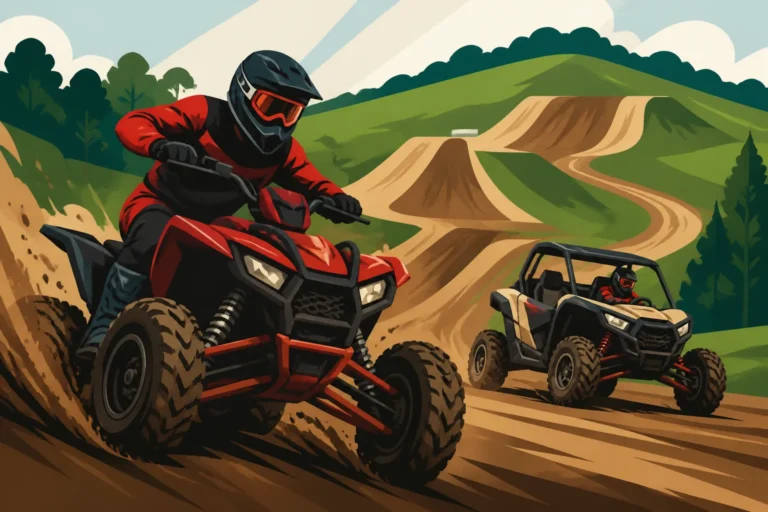
The same caution applies to motocross tracks and event properties. A facility that hosts motorcycle races may not accept ATVs, and a track is not the same thing as a trail network. If you want woods riding, ask whether the site has trails rather than relying on a broad label like “off-road park.”
North Georgia forest trails for a longer trip
The established OHV systems are a serious drive from Macon
Georgia’s designated national forest OHV systems are primarily in the northern part of the state. Houston Valley, Beasley Knob, Whissenhunt, Town Creek, Oakey Mountain, and Davenport are among the systems riders may research. From Macon, these are best treated as destination rides that need a full travel plan, not as nearby alternatives for a casual local outing.
Each system has its own character, access conditions, and restrictions. Trail width, vehicle type, experience level, weather, and maintenance closures can all affect whether a route works for your group. Do not assume that permission to ride one system automatically means your machine is suitable for another. [Georgia's Six National Forest OHV Systems] and [Georgia ATV Trails That Allow Side-by-Sides] can help narrow down which areas to investigate.
A sensible plan starts with the destination’s official trail information, followed by a check of the route to the trailhead and a realistic estimate of time on the road. Leave room for stops, trailer checks, and possible changes in weather. If the group has only a few hours to ride, a very long drive can leave everyone feeling rushed before they even reach the trail.
Houston Valley and Beasley Knob are not interchangeable
Houston Valley near Dalton and Beasley Knob near Blairsville are two named options that may come up in a search for Georgia OHV trails. They are in different areas and have different trail conditions and access details, so choose based on your machine and the current trail information rather than picking whichever name sounds more familiar.
A width limit can be a deciding factor for side-by-side owners. Some trails are designed for narrower machines, and a wide vehicle may not fit even if the park or trail system generally allows OHVs. Measure your machine as used, including any accessories that change its overall width, and compare the result with the destination’s posted rules. [Georgia Trails That Ban Side-by-Sides] and [Georgia Trail Widths and What Fits] are useful reminders that general OHV access does not guarantee access for every machine.
Trail conditions can also change the character of a ride. Steep sections, loose material, wet clay, and water crossings can be more difficult after rain. If your group includes beginners, ask about easier routes and avoid treating a difficult trail as a test of toughness. A ride that matches the least experienced rider is usually a better day for everyone.
Permits, closures, and trailhead checks
Forest OHV riding may require a permit, and the rules can differ from those at a private park. Confirm what applies to the specific system and who needs to carry proof. Do not assume that paying for access covers every rider or vehicle in the group; understand the terms before arriving at the gate. [How to Buy a Georgia Forest OHV Permit] and [Georgia's Per-Operator Permit, Not Per Vehicle] cover permit questions worth checking as you plan.
Closures are another reason to verify conditions close to your departure. Heavy rain, trail damage, maintenance work, seasonal rules, or other management decisions can affect access. A trail that was open the last time a friend rode it may not be open for your planned weekend. Check the relevant forest or ranger district information rather than relying only on an old review or a route saved on your phone.
At the trailhead, read signs and follow the posted directions even if a familiar-looking path branches off nearby. Stay on designated routes, respect gates, and do not cut around a closure. Those choices protect the trail and help keep riding access available for others. [Georgia Trail Closures After a Storm] and [Reading a Forest Service Trail Sign] are useful topics to review before a forest ride.
How to plan a Georgia trail day from Macon
Match the destination to your machine and group
Start by writing down what you are bringing: ATV or UTV, number of seats, approximate width, and any changes that affect clearance or dimensions. Then confirm that the destination accepts that type of machine. For a UTV, ask whether all intended trails are available or whether access is limited to certain routes. For an ATV, check any minimum equipment or rider requirements.
Next, think about the least experienced person in the group. A capable machine does not automatically make a difficult trail safe. Riders may have different comfort levels with steep climbs, ruts, mud, water, and tight turns. Choose an area with options that let the group adjust its plans without pressuring someone into a route they are not ready to ride.
If children are coming along, check the applicable age, supervision, passenger, and protective-equipment rules with the destination. Private parks can have their own requirements in addition to broader legal rules. Do not assume a passenger can ride simply because the machine has a spare seat. [Georgia Supervision Rules for Minors] and [Georgia Rules for Passengers on a Side-by-Side] are useful starting points for family planning.
Use maps as planning tools, not permission slips
A trail app or GPS map can help with navigation and trip planning, but a visible line on a screen does not prove that riding is allowed there. Property boundaries, private access roads, seasonal restrictions, and newly closed routes may not be obvious from a map. Confirm that the route is authorized before driving or riding it.
onX Offroad can be useful for organizing potential routes and reviewing mapped land boundaries, especially when you are comparing a longer trip with a private park visit. Still, use it as one planning tool rather than a substitute for the land manager’s rules. If you are unsure whether a road or route is open to motorized recreation, ask the property manager or relevant agency before you go.
Save the destination address, trailhead directions, and any important contact information before leaving Macon. Cell service can be uneven once you are outside town or in wooded terrain. If the route changes or you lose signal, offline navigation and a paper backup can make it easier to regroup without guessing which road is public.
Pack for the drive as well as the ride
A trail day begins before you reach the trailhead. Check the trailer, tie-downs, tire condition, lights, and hitch connection, and make sure the machine is secured for the drive. Carry the gear your group needs for the expected conditions, including helmets, eye protection, water, basic tools, and any required riding documents. For a longer trip, include a plan for fuel stops and recovery if a machine has a problem.
Central Georgia weather can make a big difference to the ride. Heat, rain, and muddy conditions affect both rider comfort and trail surface. Check the forecast for the riding area rather than relying only on conditions in Macon; weather can differ significantly between central and north Georgia. Avoid pushing into wet or damaged trails if the property has closed them or if conditions make travel unsafe.
Agree on a simple group plan before starting: who leads, who follows, where to regroup, and what to do if someone gets separated. Keep the pace appropriate for the least experienced rider and stop when visibility, fatigue, or trail conditions call for it. A little coordination is far less frustrating than trying to sort out a separation at a trail junction.
Riding rules and common planning mistakes
Permission, registration, and road access are separate issues
Being allowed to ride on a particular property does not necessarily settle every question about the machine. Ownership paperwork, registration, insurance, and public-road use are separate matters, and requirements can depend on the machine and how it will be used. Do not treat a trail park’s admission as authorization to ride on public streets or county roads on the way there.
Some Georgia rules concern a limited class of machines and specified public-road use. That does not mean ordinary ATVs or all side-by-sides are street legal. Before using any public road, identify the exact rule that applies to your vehicle and route. [Are Side-by-Sides Street Legal in Georgia?] and [Georgia MPOHV Road Rules: County Roads Only] explain why registration and road access should not be assumed from one another.
If you plan to ride only at a private park or on property where you have permission, check that property’s rules and confirm how its access terms relate to your machine. Carry the documents the manager requires and keep proof of ownership and emergency contacts easy to find. [Georgia Proof of Ownership on the Trail] is a practical read for avoiding a paperwork scramble.
Do not treat wildlife areas and forest roads as open trail networks
Wildlife management areas can have specific access rules tied to roads, dates, hunting activity, and vehicle use. The fact that a gate is open, or that a road appears on a map, does not mean recreational ATV riding is allowed. Review the rules for the specific WMA and the time of your visit before taking a machine onto the property.
Similarly, a forest road may be open to some motor vehicles while nearby trails are closed to recreational riding. Those are different permissions. Follow posted restrictions and do not use a road simply because another rider has shared a track there. [Georgia WMA Riding Rules Explained] and [Georgia National Forest Trail-Only Rule] can help clarify the difference between road access and designated OHV trail access.
If a route crosses private land, get clear permission from the owner before riding. A route shared by a friend or found online is not a substitute. Respect gates, fences, livestock, and posted signs, and do not create a new route around an obstacle. In a rural area, one unauthorized ride can damage property and strain access for local riders.
Avoid the most common trip-day disappointments
One frequent mistake is driving a long way without checking the site’s status. Another is bringing a machine that does not fit the permitted trails. A third is assuming that a trail park, forest, or WMA has the same rules as the place you rode last month. Each is avoidable with a few direct questions before departure.
Use this quick check before loading:
- Confirm the destination is open to riders on your planned day.
- Verify that your ATV or UTV is allowed and identify any width restrictions.
- Check permits, rider age rules, passenger policies, and required gear.
- Review weather, closures, and trail conditions for the destination itself.
- Save directions and emergency contacts, and tell someone where you plan to ride.
- Make sure the trailer and machine are ready for the drive.
If the only information you can find is an old listing or an unverified route, keep looking. A confirmed private property or a designated OHV system is a better plan than improvising on land where permission is unclear. For a wider look at what is available across the state, [Georgia Private Off-Road Parks Compared] can help you build a shortlist and compare it with the drive from Macon.
Disclaimer
This article is for general informational purposes only and does not constitute professional advice. Laws, prices and regulations vary by location and change over time. Consult a qualified professional for guidance on your specific situation.