Beasley Knob’s January to April Closure in Georgia
Beasley Knob’s winter-to-spring closure can derail a ride if you have already loaded the trailer and driven toward Blairsville. This guide explains why the Georgia OHV area closes, how to check whether it has reopened, what to do if the gate is still shut, and how to plan a safer ride without assuming a seasonal date guarantees access.
What the Beasley Knob closure means
Why the trail system closes
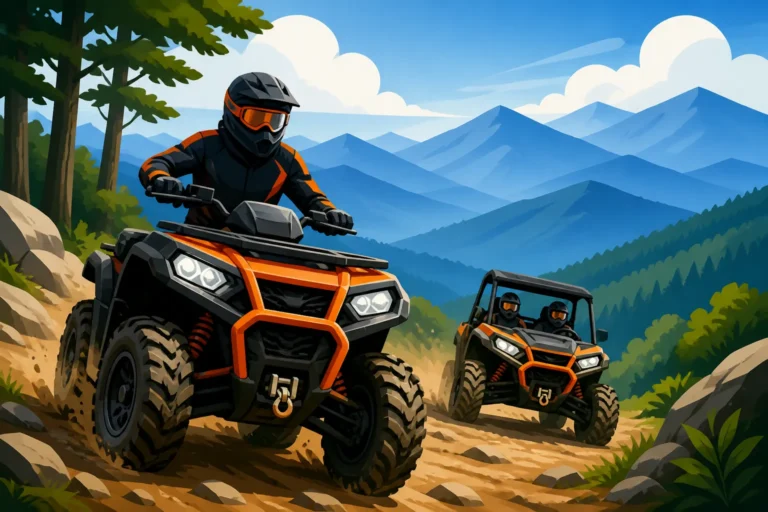
Beasley Knob OHV Trail System sits in the Chattahoochee National Forest near Blairsville, in North Georgia. Its trails wind through mountain terrain, where winter weather and early-spring rain can leave soil saturated and vulnerable. When tires churn through wet ground, they can cut deep ruts, loosen soil, and send sediment downhill into drainage areas.
A closure is a practical way to let the trail surface recover before heavier riding returns. Even a machine that seems to pass through a muddy section without difficulty can deepen damage for the next rider. That damage may then require extensive maintenance or lead to longer restrictions.
The seasonal closure is often described as running from January into April, but a calendar date alone is not a dependable signal that the trails are open. Conditions, maintenance needs, and posted land-management notices matter. Treat the gate status and current official alerts as the deciding information, rather than relying on last year’s schedule or a social media post.
What closed access can include
A closure can apply to the OHV trail system even when nearby roads, recreation sites, or other parts of the forest remain accessible. That distinction can be confusing: seeing an open road or another visitor in the area does not mean riding a designated OHV trail is allowed. Check the notice for the specific trail system and the specific activity it restricts.
Do not ride around a closed gate, use an unofficial bypass, or assume that a trail is open because it looks dry. A closure is a land-management rule, not merely a suggestion about whether the surface will be comfortable. Riding while a route is closed can damage the trail and create problems for other visitors and forest staff.
It helps to read [Beasley Knob's Spring Closure] alongside general guidance on [Georgia Trail Closures After a Storm]. Both seasonal conditions and short-term weather can affect access, and a trail that is open in principle may still be temporarily restricted after heavy rain or maintenance work.
How to confirm whether Beasley Knob is open
Check the official status before leaving
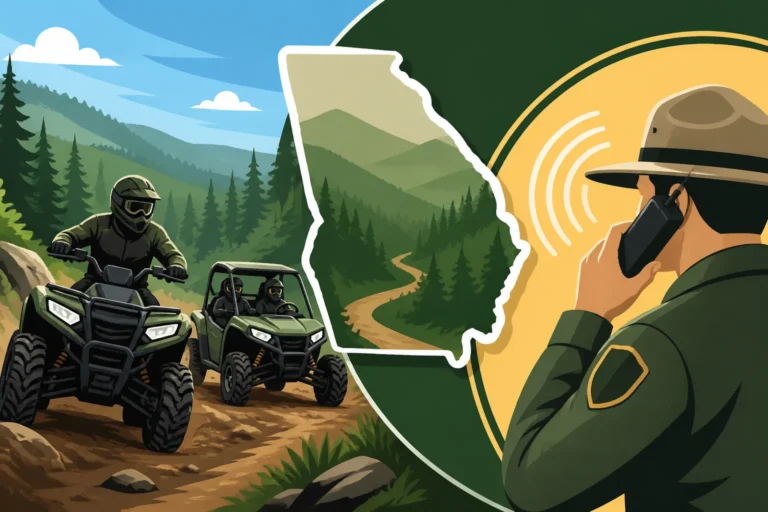
Before loading up, look for current notices from the land manager responsible for the area. Check the relevant U.S. Forest Service and ranger-district information for Beasley Knob, including alerts about seasonal reopening, storm damage, maintenance, and temporary restrictions. If a notice is unclear or seems out of date, contact the appropriate ranger district rather than making the drive based on a guess.
Check again on the day you plan to ride. Mountain weather can change quickly, and conditions that were acceptable earlier in the week may not be suitable after substantial rainfall. If you are travelling from Atlanta, Macon, or farther away, a quick status check can save hours of towing and prevent the frustration of arriving at a closed entrance.
A mapping app can help with route planning, but it should not be treated as confirmation that a trail is legally open. Riders sometimes use onX Offroad to review mapped routes and orient themselves in the area. Pair that kind of map with current land-manager information; a line displayed on a map does not override a closure notice or a locked gate.
Use maps as a planning aid, not permission
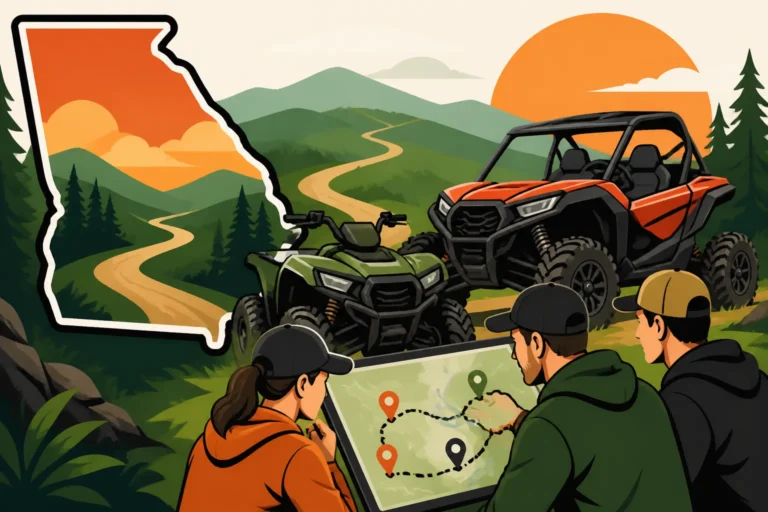
Offline maps are useful in the mountains, where cell service may be inconsistent. Before you leave home, download the map area you need, identify the legal approach to the trailhead, and make sure everyone in your group knows where to meet if vehicles get separated. onX Offroad can be one tool for studying mapped routes before a trip, but confirm that the route you plan to ride is open and designated for your vehicle.
Pay attention to map details that can affect the day: trail access points, road connections, junctions, and possible places to turn a trailer around. Avoid improvising a route through private property, a closed forest road, or a route that is not designated for OHV use. A tempting shortcut can become a trespass problem or put a vehicle somewhere it cannot safely turn around.
For broader planning, compare the Beasley Knob status with [How to Check Georgia Forest Trail Status] and [Georgia Trail Conditions Before You Drive]. The useful habit is to check both the place-specific notice and the conditions that can change after rain, rather than relying on a single map layer.
| Before the trip | What to verify | Why it matters |
|---|---|---|
| Seasonal status | Whether Beasley Knob is open to OHV riding | A typical reopening window does not guarantee access |
| Recent notices | Closures, repairs, storm damage, or restrictions | Conditions can change after a weather event |
| Trail designation | Which routes are open to your type of machine | Nearby roads may have different rules |
| Permit requirements | Whether the required forest OHV permit applies | A trail opening does not remove permit obligations |
| Weather and ground conditions | Rain, runoff, and wet or muddy sections | Soft ground can increase damage and recovery risk |
| Group logistics | Meeting point, fuel, communication, and trailer plan | Mountain access and cell coverage can complicate a ride |
Plan a Beasley Knob ride around the closure
Choose a backup area before you tow
A backup plan is especially valuable when your trip depends on a seasonal opening. Pick another legal riding area that fits your machine, experience, and travel time, then confirm its access and rules separately. Do not assume another trail system is open simply because Beasley Knob is closed—or vice versa. Each location can have different operating conditions, closures, and permitted vehicle types.
Use the closure as a reason to check the practical details of your alternative. Some trails have width limits, surface conditions that are a poor match for a large side-by-side, or routes intended for a different skill level. If your group includes both ATV and UTV riders, verify that the same trails accommodate all the machines before setting out.
Georgia has several distinct forest OHV systems, but they are not interchangeable. [Georgia's Six National Forest OHV Systems] provides useful context for comparing destinations, while [Georgia ATV Trails That Allow Side-by-Sides] can help UTV owners narrow their options. Use both as starting points, then check the destination’s current rules and closures directly.
Confirm permits and riding rules
A trail reopening does not mean every rider can arrive and ride without preparation. Check whether a forest OHV permit is required, who needs to carry one, and what proof must be available at the trailhead. Georgia forest riding rules can differ from private-park requirements, so do not assume that a permit, waiver, or pass from one place applies somewhere else.
Review vehicle and rider requirements before the drive. Make sure your machine is suitable for the trail system, has no obvious mechanical issue, and fits the posted limits. For a new group member, explain how to follow trail signs, keep a safe distance, and stop in a place where other riders can see them. These basics matter even more on narrow mountain routes where visibility can be limited.
For a wider overview, see [Georgia OHV Permits: What You Need Before You Ride] and [Georgia National Forest Trail-Only Rule]. If you are deciding between Beasley Knob and another destination, also review [Georgia Trails That Allow Side-by-Sides] so you do not tow a machine to a system that does not accommodate it.
Ride responsibly when the trails reopen
Let the ground conditions guide your decision
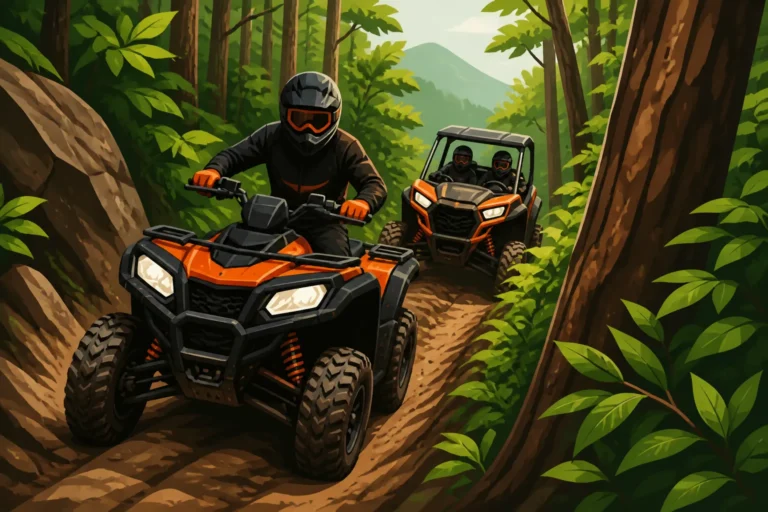
An open gate is not an invitation to ignore trail conditions. If the ground is saturated, a crossing is running high, or tires begin cutting deep tracks, slow down and reassess. Riding through a section simply because it is technically passable can cause avoidable damage and turn a manageable route into a recovery situation.
Use a light touch on the throttle, especially on climbs and soft corners. Spinning tires can dig into the surface, and repeated attempts to power through mud can make the damage worse. If a section looks beyond your group’s ability or the machine’s capability, turning around is usually the sensible choice. The goal is to finish the day safely and leave the trail in a condition other riders can use.
Avoid widening a muddy trail by riding around the edge. That can damage vegetation and create new tracks that are not part of the designated route. For more detail on riding after wet weather, see [Georgia Trail Riding After Heavy Rain] and [Tread Lightly on Erodible Clay]. Both are good reminders that trail preservation is part of responsible riding, not an optional extra.
Prepare for mountain conditions
Beasley Knob’s setting makes basic preparation important even on a short outing. Carry water, weather-appropriate layers, a charged phone, and a way to communicate if someone in the group becomes separated. Cell coverage can be unreliable in forested and mountainous areas, so agree on a simple regrouping plan before the first trail junction.
Inspect your vehicle before unloading. Check tires, brakes, steering, lights, and any recovery equipment you intend to use. A winch or tow strap is only useful if the group knows how to use it safely, and recovery should not involve attaching equipment to an unsuitable anchor point or putting anyone in a dangerous position. If the trail is wet enough that a recovery seems likely, consider postponing the ride.
Trail maps can help with orientation, but keep a backup plan for a dead phone or depleted battery. Some riders use onX Offroad to prepare offline maps before heading into areas with limited service; still, share the route plan with your group and follow posted signs on the ground. Keep the machine on designated routes, and do not use a navigation app to justify riding through a closed or unsigned area.
What to do if Beasley Knob is still closed
Make the most of the trip without breaking the rules
If you reach the entrance and find a closure notice, stop and read it carefully. Do not move barriers, ride around the gate, or follow another vehicle through a restricted entrance. If the notice gives a contact or explains the restriction, use that information to understand whether the closure is seasonal, weather-related, or tied to maintenance.
If your backup riding area is still open and reasonably close, switch plans only after confirming its rules and conditions. If it is not a practical option, turning the day into a scouting or sightseeing trip may be less frustrating than trying to find an unverified route. Do not substitute a forest road, private track, or utility corridor for a designated OHV trail unless access is explicitly allowed.
A delayed ride can also be a chance to check your equipment and paperwork before the next outing. Replace worn straps, review your permit details, and make sure your trailer setup is ready. That preparation is much less stressful at home than beside a closed gate with a loaded trailer.
Avoid relying on rumors about reopening
Rumors can spread quickly when riders are eager for the season to start. A post saying “the trails are open” may refer to another destination, an earlier season, or a limited portion of the area. A photograph of an open entrance is not enough to establish the current status of every route.
Look for a date and a clear description of the location in any update you read. If the information does not identify Beasley Knob specifically, or does not clarify whether OHV riding is allowed, treat it as unconfirmed. A direct check with the land manager is more reliable than planning around a vague comment in a group chat.
Keep the same habit throughout the riding season. Seasonal reopening is one checkpoint; rain closures, repairs, and other restrictions can arise later. Rechecking before each visit helps protect the trails and keeps a promising weekend from turning into a long, avoidable drive.
Disclaimer
This article is for general informational purposes only and does not constitute professional advice. Laws, prices and regulations vary by location and change over time. Consult a qualified professional for guidance on your specific situation.