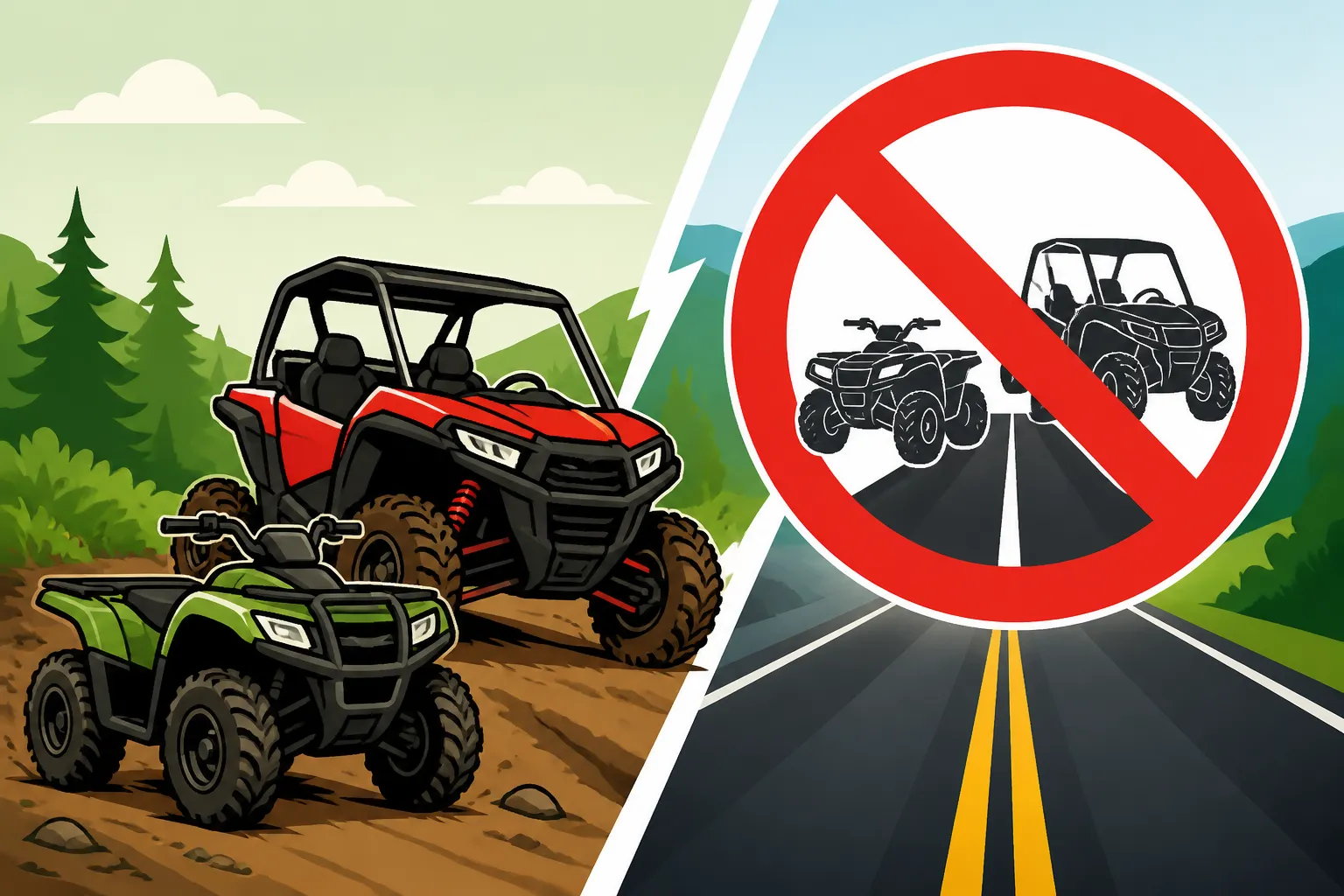
Why Georgia State Highways Stay Off Limits
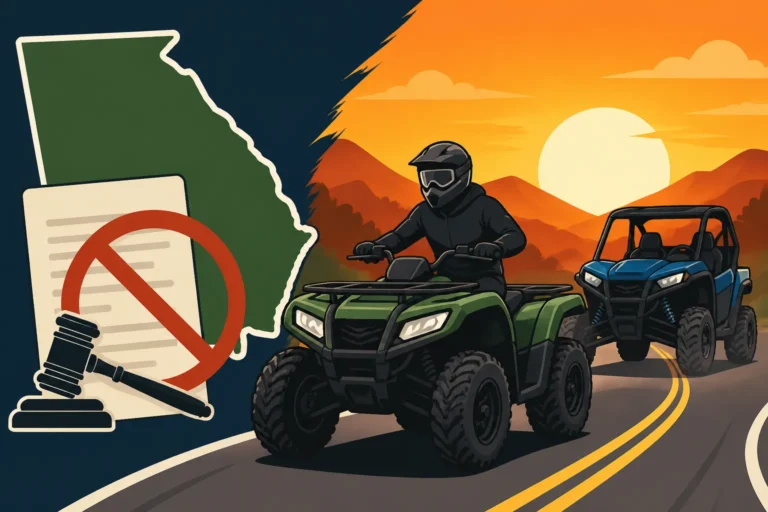
It’s a scenario many of us have faced: you’re out on your side-by-side, enjoying a beautiful Georgia day on a county road, and you need to get from one section of trail to another. The quickest route often involves a short hop on a state highway, and you might think, "My UTV is registered, it has lights and mirrors – why can't I just quickly get across?" The reality is, Georgia law draws a very strict line in the sand when it comes to state highways, and off-highway vehicles, including registered MPOHVs, simply don't fit the bill. This guide will dive deep into why these major arteries remain off-limits, helping you understand the rules, avoid costly mistakes, and find legal ways to get where you're going.
Understanding Georgia's Road Classification System
Navigating Georgia's road network with an off-highway vehicle (OHV) can feel a bit like learning a secret language. The rules change dramatically depending on whether you're on a dirt path, a county road, or a bustling state highway. Understanding these distinctions is the first step to staying legal and safe.
County Roads Versus State Highways and Interstates
Think of Georgia's roads as having different purposes and caretakers, much like how different rooms in your house serve unique functions. County roads, often the ones that wind through rural areas or connect smaller communities, are managed by local county governments. These are typically lower speed, lower traffic volume roads, and they're the primary domain for registered Multi-purpose Off-Highway Vehicles (MPOHVs) in Georgia. They might be paved, gravel, or even dirt, and the local county can set specific ordinances for their use.
State highways, on the other hand, are the major arteries that crisscross Georgia, connecting larger towns and cities, or serving as vital corridors for commerce and tourism. These are designated with "SR" (State Route) numbers and are under the jurisdiction of the Georgia Department of Transportation (GDOT). They're engineered for higher speeds, heavier traffic volumes, and a different class of vehicle entirely. Interstates (like I-75, I-85, I-20) are the top tier – high-speed, limited-access highways designed for maximum efficiency in long-distance travel, and they have the most stringent rules of all. The gap in design and intended use between your UTV and a semi-truck traveling at 70 mph on an interstate is simply too vast for safe integration.
The Role of the Georgia Department of Transportation (GDOT)
The Georgia Department of Transportation (GDOT) is the state agency responsible for planning, constructing, and maintaining Georgia's extensive network of state highways and interstates. Their primary mission involves ensuring the safety and efficiency of these vital transportation corridors. This includes everything from designing roads for specific traffic speeds and loads to managing signage, traffic signals, and even emergency responses.
Because state highways are designed for high-speed, conventional motor vehicle traffic, GDOT sets stringent standards for the types of vehicles allowed on them. These standards consider factors like vehicle stability, braking capabilities, acceleration, and crashworthiness, all of which are critical for maintaining safe traffic flow at higher speeds. The safety standards applied to state highways are fundamentally different and far more demanding than what might be considered acceptable for a low-speed county road. This is why even a fully equipped MPOHV, while legal on some county roads, simply doesn't meet the engineering and safety criteria GDOT requires for state highway operation.
Why ATVs and UTVs Don't Fit State Highway Criteria
It's not just about a sign or a simple rule; there are fundamental design and safety reasons why your beloved ATV or UTV isn't cut out for state highway travel. It's truly about the nature of the beast itself.
Speed, Stability, and Design Limitations
ATVs and UTVs are marvels of engineering for their intended purpose: tackling challenging off-road terrain. They have aggressive tires, flexible suspensions, and high ground clearance designed to crawl over rocks, power through mud, and navigate uneven trails. These very features, however, become liabilities on a smooth, high-speed asphalt highway. Their suspensions are often too soft for stable highway driving, leading to excessive body roll and unpredictable handling at speed. Many UTVs, while capable of decent speeds, might not reliably sustain the minimum speeds required on state routes, let alone keep up with traffic flowing at 55-65 mph. Conversely, some high-performance models that can exceed 65 mph lack the braking and stability systems engineered for safe stops from such speeds on pavement.
Imagine trying to drive a monster truck designed for an off-road course down a busy interstate. The physics just don't line up. Your UTV, even one optimized with aftermarket parts, is still built from the ground up for dirt, not asphalt. If your machine is one that really pushes the envelope and might exceed [A Machine That Exceeds 65 mph], or if it's a more utilitarian model that struggles to maintain [A Machine That Tops Out Below 25 mph], you'll quickly see why these differences matter on a road built for entirely different purposes. The design compromises made for off-road prowess mean they are inherently less stable and predictable when trying to perform like a conventional highway vehicle.
Safety Equipment and Roadworthiness Standards
Even if your UTV has been tricked out with all the bells and whistles, including a full windshield, turn signals, and a horn, it still fundamentally differs from a car or truck in terms of mandated safety features. Highway-legal vehicles are required to meet rigorous federal motor vehicle safety standards (FMVSS) concerning everything from crash protection and crumple zones to headlight beam patterns and braking performance. Most ATVs and UTVs simply aren't engineered to these standards. Their chassis might not withstand impacts at highway speeds in the same way a car's would, and their open-cab designs offer less occupant protection.
While [Headlights, Brake Lights and Mirrors on the Checklist] are vital for MPOHV registration and county road use, they don't magically transform your UTV into a highway-ready vehicle. The tires, for instance, are often aggressive mud or all-terrain treads, designed for grip off-road, not for optimal traction, quietness, and longevity on pavement at high speeds. Your UTV's braking system, while perfectly adequate for trail riding, might not have the same stopping power or fade resistance required for repeated, hard braking scenarios common on highways. It's a comprehensive package of design, not just a few add-on accessories, that makes a vehicle suitable for highway travel.
The Legal Definition of a "Motor Vehicle" for Highway Use
At the heart of the matter lies how Georgia law specifically defines what constitutes a "motor vehicle" eligible for general highway travel, and crucially, what falls outside that definition. State laws are very precise, often outlining vehicle classifications based on design, weight, and intended use. While Georgia's MPOHV registration law has carved out a special niche for side-by-sides on county roads, it explicitly maintains the distinction that these machines are not conventional motor vehicles for the purpose of state highways.
Legislators and safety experts recognize the inherent dangers of mixing off-highway vehicles, with their unique performance characteristics, with the much faster and heavier traffic found on state routes. Therefore, the laws are written to create clear boundaries. An ATV or UTV, by its very nature and design, is generally excluded from the legal definition of vehicles permitted on high-speed, high-volume state highways and interstates. This legal framework is in place to protect not only the occupants of the OHV but also everyone else on the road.
The Specific Georgia Laws Prohibiting State Highway Access
It's easy to assume that if you've gone through the trouble of registering your MPOHV, you've essentially made it "street legal" for all roads. Unfortunately, when it comes to Georgia's state highways, that assumption could lead to a heap of trouble.
Georgia's MPOHV Registration and Its Limitations
When Georgia introduced its Multi-purpose Off-Highway Vehicle (MPOHV) registration process, it was a game-changer for UTV owners. It allowed many side-by-sides to legally operate on designated county roads, opening up new possibilities for rural travel, hunting access, and getting to local trailheads. However, the legislation was very clear: this privilege is explicitly limited to county roads. It does not extend to state routes, U.S. highways, or interstates. The state recognized the difference in traffic patterns, speed limits, and overall safety risks associated with these different classes of roads.
So, while you might have gone through the full process for [Georgia MPOHV Registration Explained] and proudly display your special MPOHV plate, that plate is essentially a "county roads only" pass. It grants you access to certain parts of the public road network but specifically excludes the state-managed arteries. The registration process itself doesn't magically transform your UTV into a vehicle that meets the same safety and engineering standards as a passenger car or truck intended for highway travel. For a full rundown of what you can do, remember to check out articles like [Georgia MPOHV Road Rules: County Roads Only] and [What Registration Buys You on a County Road]. It's crucial to understand these distinctions to avoid getting into hot water.
Penalties and Enforcement for State Highway Violations
Ignoring the rules about state highway access for your UTV or ATV in Georgia can lead to some pretty significant headaches and expenses. Law enforcement, particularly the Georgia State Patrol, takes these violations seriously because of the inherent safety risks involved. If you're caught operating your off-highway vehicle on a state highway, U.S. highway, or interstate, you can expect a citation.
The penalties can include substantial fines, potentially impacting your driving record, and in some cases, your machine could even be impounded. Imagine the hassle and cost of retrieving your UTV from an impound lot, not to mention the storage fees that accrue. These consequences are designed to deter risky behavior and reinforce the separation between off-highway recreation and conventional highway travel. For a deeper dive into the potential repercussions, you might want to read up on [Georgia Penalties for an Unregistered Road Machine] (even if yours is registered for county roads, the rules for state highways are different) and [Georgia Ticket Cost for Illegal Road Riding]. Enforcement officers, including county deputies and city police who may patrol state routes within their jurisdiction, are trained to spot and address these violations swiftly.
Navigating Around State Highways: Alternatives and Best Practices
So, if state highways are a no-go, how do you get your machine where it needs to be? It requires a bit of planning and sometimes a little extra effort, but there are always safe and legal alternatives.
Using County Roads as Designated MPOHV Routes
The good news is that Georgia's MPOHV registration opens up a vast network of county roads for legal use. Instead of trying to find shortcuts on state highways, the best practice is to lean into the county road system. Before you head out, pull up a good map (physical or digital) and carefully plan your route. Look for county-maintained roads that can connect your starting point to your destination, even if it means a slightly longer, more winding journey. Many riders find that exploring these backroads is part of the adventure anyway!
It's worth noting that some counties might have specific ordinances regarding MPOHV use, so it's always smart to check with the local county sheriff's office or tag office if you're venturing into a new area. However, the general rule of thumb is that if it's a designated county road, your registered MPOHV should be good to go. Understanding the full scope of [County Road Systems and Where They Run] is key to making these connections work for your rides. Sometimes, taking the scenic route on a legal county road is far more enjoyable (and less stressful) than constantly worrying about breaking the law on a state highway.
Safe Crossing of State Highways
While driving on a state highway is prohibited, Georgia law does allow for a registered MPOHV to cross a state highway at a designated intersection. This is a crucial distinction and comes with strict guidelines. You are permitted to make a direct crossing from one county road to another, traversing the state highway at a right angle, without traveling longitudinally (down the length of the highway) at all. This means you can't drive down the state highway for even a short distance to get to another turn-off.
When performing such a crossing, you must exercise extreme caution. Yield to all oncoming traffic on the state highway, and only proceed when it is completely safe to do so. Think of it like crossing a busy street on foot – you wouldn't walk down the street, but you would cross it at a crosswalk. Ensure your machine is visible, and if possible, signal your intentions clearly. This careful approach is outlined in regulations concerning [Crossing a Georgia State Highway on a UTV] and specific allowances for [Georgia Crossings at Designated Points]. Always prioritize safety and follow traffic laws during these brief, necessary maneuvers.
Trailering Your Machine for Longer Distances
For journeys that require covering significant distances, especially when your route would naturally involve state highways or interstates, the safest and most reliable method is to trailer your machine. This might seem like an extra step, but it eliminates any legal ambiguity and ensures you and your UTV arrive safely. Many riders invest in a dedicated utility trailer for this very reason.
Trailering allows you to transport your UTV to a specific riding area, a friend's property, or a network of county roads without having to worry about highway restrictions. It also protects your machine from wear and tear that comes with riding on pavement, preserving its tires and suspension for the trails it was designed for. Remember to ensure your trailer is properly registered and tagged. You can find more information on this by looking up [Registering the Trailer Separately] or understanding [Trailer Tags and What They Cost]. It’s a small investment in time and money that pays off in peace of mind and compliance with the law.
The Future of Off-Highway Vehicle Access in Georgia
The landscape of off-highway vehicle access in Georgia isn't static. While state highways remain off-limits for now, understanding ongoing legislative discussions and local initiatives can shed light on potential future changes and current limitations.
The Sunset Clause and Its Implications
One of the most significant aspects of Georgia's MPOHV legislation is a "sunset clause." This means that the law allowing MPOHVs on county roads is not permanent; it has a scheduled expiration date. Specifically, [Georgia's July 2027 Sunset on Road Access] is a date every MPOHV owner should be aware of. Unless the Georgia General Assembly takes action to extend, modify, or make permanent the current MPOHV laws before that date, the ability to legally ride your registered side-by-side on county roads could simply disappear.
While this sunset clause doesn't directly address state highway access – which has always been prohibited – it highlights the temporary nature of any public road access for these vehicles. It's a reminder that the conversation around OHV use on public roads is ongoing and subject to change. If the current MPOHV law isn't renewed, it would revert to a stricter environment where even county road use is severely limited, impacting many riders. For more details on what this could mean for current registrations, it's worth exploring articles like [What Happens to Registrations at Sunset]. It's a dynamic situation that warrants keeping an eye on future legislative developments.
Advocacy and Local Ordinances
While state highways remain firmly off-limits due to statewide legislation and GDOT's stringent safety requirements, there are avenues for advocating for OHV access and for influencing rules at the local level. Local communities, counties, and even cities have more flexibility to enact ordinances that cater to the needs of their residents, especially regarding vehicles like golf carts or Personal Transportation Vehicles (PTVs). For instance, some communities have created specific paths or designated certain streets for golf cart use, as explored in [Georgia PTV Ordinances Cities Can Pass].
However, it's crucial to understand that these local ordinances primarily apply to local roads or designated paths and generally do not override state law regarding state highways. A city or county cannot grant permission for an ATV or UTV to operate on a state highway passing through its jurisdiction if state law explicitly forbids it. Any advocacy efforts would need to focus on demonstrating safety and integration possibilities for specific types of roads, likely at the county level first, before even contemplating a discussion about the more complex state highway system. Organizations and riding clubs often play a vital role in these local advocacy efforts, working with county commissioners and city councils to craft sensible local rules.
Enhancing Your Machine for Legal County Road Use (and not highway use)
Even though state highways are a no-go, there's still plenty you can do to make your UTV or ATV safer and more compliant for the county roads it is allowed on. This isn't about transforming it into a highway vehicle, but rather optimizing it for its legal, intended use.
Essential Safety Upgrades for MPOHV Registration
To be eligible for Georgia's MPOHV registration, your side-by-side needs certain safety features to operate legally on county roads. While these won't magically grant you access to state highways, they are crucial for safe and legal local road travel. These requirements generally include working headlights, brake lights, a horn, and at least one rearview mirror. Some riders also opt for turn signals, although they aren't always a mandatory MPOHV registration requirement, they certainly enhance visibility and safety on shared county roads.
Many aftermarket companies, like SuperATV, offer accessory kits and individual components designed to help UTV owners meet these criteria. You can find everything from DOT-approved windshields and mirrors to full lighting and signal kits. Installing these upgrades is a smart move not just for compliance but for your own safety and the safety of others. A comprehensive list of what to look for can be found in resources like the [Georgia Side-by-Side Registration Checklist]. Remember, these enhancements make your machine better for county roads and trails, but they don't change its fundamental classification or open up state highway access.
Understanding Insurance Requirements
Operating any motor vehicle on public roads in Georgia, including a registered MPOHV on county roads, requires adequate liability insurance. This isn't just a good idea; it's a legal mandate. The purpose of liability insurance is to protect you financially in case you cause an accident that results in injury to another person or damage to their property. Without it, you could face severe financial consequences, not to mention legal penalties.
When you go to register your MPOHV at the county tag office, you'll be asked to provide proof of insurance. The state has minimum coverage requirements, and it's essential to ensure your policy meets these standards. Even if you only plan to ride on private land, if your machine is registered for public road use, insurance is a must. Understanding [Georgia Liability Insurance Tied to Registration] and the [Georgia Insurance Minimums for Road Use] is critical. Shop around and make sure you have the right coverage for your machine, giving you peace of mind whether you're on a country road or pulling into a gas station.
Disclaimer
This article is for general informational purposes only and does not constitute professional advice. Laws, prices and regulations vary by location and change over time. Consult a qualified professional for guidance on your specific situation.