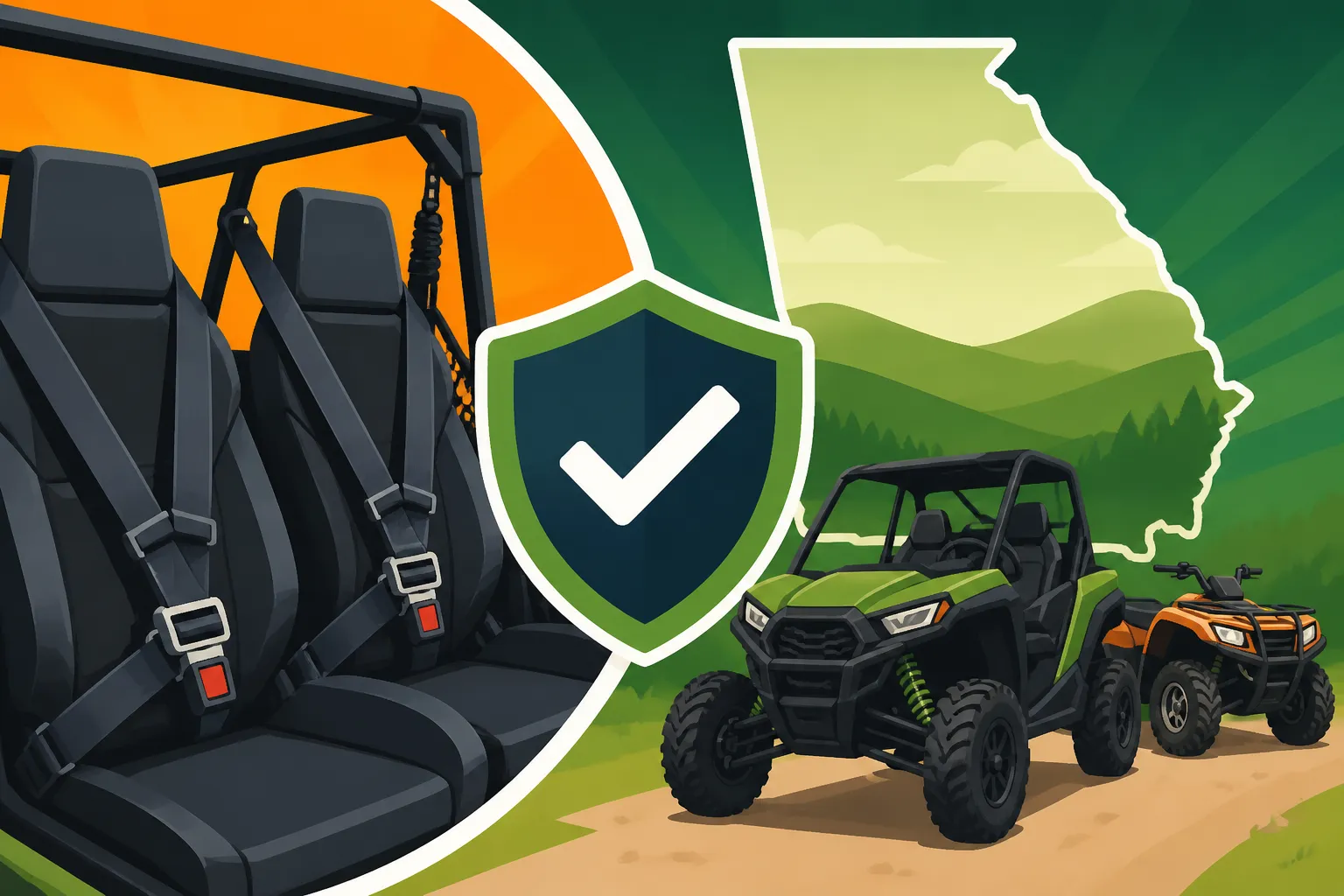
Factory Seat Belts and the Eligibility Check
Trying to figure out all the ins and outs of registering an off-highway vehicle in Georgia can feel like a maze, especially when you start diving into the specific equipment requirements. It's a common frustration to have a machine you love, only to discover it doesn't quite fit the mold for road-legal use. This guide is going to walk you through one of the most critical, yet often misunderstood, elements of Georgia's MPOHV registration: the absolute necessity of factory-installed seat belts and how that plays into getting your machine approved.
The Foundation: What Georgia's MPOHV Registration Is All About
Before we get deep into seat belts, it's really helpful to understand the bigger picture of Georgia's new MPOHV (Multipurpose Off-Highway Vehicle) registration. For years, folks in Georgia just rode their ATVs and UTVs on private land or designated trails, often without any official state recognition or ability to venture onto public roads. That all changed with the introduction of MPOHV registration, which finally offered a pathway for certain types of off-highway vehicles to legally use specified county roads. This isn't about making every single quad or side-by-side street legal, but rather providing a framework for machines that meet a very specific set of criteria.
The state isn't just handing out license plates willy-nilly; there's a serious eligibility checklist designed to ensure that any machine venturing onto a county road has certain safety features akin to traditional vehicles. It’s all about creating a safer environment for everyone sharing those public pathways. This includes everything from how wide your machine is to its top speed, and yes, crucially, what kind of safety restraints it has. Many riders who've been around the block for a while might assume their trusted machine, perfect for the trails, will easily qualify, only to find out it's missing some key components that the state now demands for road use. It's a significant shift in how off-highway vehicles are viewed, moving some from purely recreational to potentially road-capable, but with strict stipulations. For a complete understanding of the program, you might want to review [Georgia MPOHV Registration Explained].
A New Era for Off-Highway Vehicle Use
This new registration system opened doors for many Georgians who wanted to use their side-by-sides to access hunting land, get to a fishing spot, or simply traverse rural county roads for utility purposes. Think about ranchers needing to check fences along a county dirt road, or a family wanting to drive their UTV from their cabin to the general store a mile down the road. Before this, they were often in a legal grey area, risking fines or worse. The MPOHV plate provides that legitimacy, but it comes with a responsibility to meet the state's safety standards. It’s a voluntary program, meaning no one has to register their machine, but if you want that road access, you do have to meet the criteria. This isn't just a simple paperwork exercise; it's a careful evaluation of your machine's design and features.
Many of us have paperwork for our machines, whether it's a bill of sale or an original purchase agreement. When you go to register, the county tag office will scrutinize details that might have seemed minor before. Having all your ducks in a row with clear documentation, perhaps using templates from a site like LawDepot for private sales, can make the process smoother. They want to ensure your machine isn't just called an MPOHV but is one in practice, designed with specific safety considerations in mind.
Understanding the MPOHV Eligibility Checklist
The Georgia Department of Revenue has laid out a clear set of requirements that machines must meet to qualify for MPOHV registration. This isn't just about general good practice; these are hard-and-fast rules. These criteria cover everything from the vehicle's weight and width to its seating configuration and, of course, its safety equipment. If your machine doesn't tick every single box, it simply won't get that MPOHV plate. It’s a rigorous test, and rightfully so, as these machines are intended for roads shared with cars, trucks, and other vehicles. The state aims to minimize risks by ensuring only appropriately equipped machines gain road access.
One of the most immediate disqualifiers for many traditional ATVs, for instance, is the straddle seat design and handlebars, which don't align with the MPOHV definition. This is where side-by-sides, with their bench or bucket seating and steering wheels, typically find an advantage. But even within the side-by-side category, not all models are created equal when it comes to meeting all the requirements. This leads us directly to the star of today's show: the factory seat belts. If you're curious about the full list, you'll want to dive into [Georgia MPOHV Eligibility: The Eight-Point Test].
The Role of Factory Seat Belts in MPOHV Eligibility
Now, let's talk about those seat belts. For many recreational riders, seat belts might seem like an optional accessory, especially if they're used to riding older machines or in environments where such restraints aren't strictly enforced. However, when it comes to Georgia MPOHV registration, factory-installed seat belts are not just a recommendation; they are an absolute, non-negotiable requirement. This isn't something you can add on after the fact with aftermarket parts and expect it to pass muster with the state. The emphasis is on factory-installed for a very important reason.
The state is looking for machines that were designed and built with a certain level of safety engineering from the ground up. This means the seat belts, their anchor points, and the structural integrity of the passenger compartment must meet manufacturer specifications and safety standards. An aftermarket harness, no matter how robust, often won't satisfy this requirement because it wasn't part of the original design and testing of the vehicle. This is where many riders hit a snag, especially if they've modified their machines for extreme off-road use or bought an older model that might predate modern safety standards.
Why "Factory-Installed" Matters So Much
The term "factory-installed" isn't just bureaucratic jargon; it's a critical safety distinction. When a vehicle manufacturer installs seat belts, they are integrated into the vehicle's design, frame, and safety cell. These systems undergo extensive crash testing and engineering analysis to ensure they will perform as intended in an accident. The anchor points are reinforced, the belt webbing meets strength standards, and the retraction mechanisms are designed for reliability.
If you were to install aftermarket seat belts, even high-quality ones, the county tag office has no way of verifying that they meet the same rigorous safety standards or that their anchor points are sufficiently strong to withstand impact. Without manufacturer certification for that specific installation, it's a big unknown. For a state agency responsible for public safety on roads, this unknown is simply too great a risk. So, when they say "factory seat belts," they mean exactly that: the ones that came with your machine from the showroom floor, designed by the manufacturer to protect occupants. This ensures a consistent and verifiable safety standard for all registered MPOHVs.
What the County Tag Office Will Be Looking For
When you bring your machine (or its documentation) to the county tag office for [Georgia MPOHV Registration Paperwork Checklist], they aren't just glancing at your paperwork. They're going to want to verify that your vehicle actually possesses all the necessary features. For seat belts, this means they'll likely look for visible evidence of factory-installed restraints for each designated seating position.
This might involve examining the seat belt buckles, the retractors, and the anchor points. They'll want to see that the belts are in good working order, not frayed, cut, or damaged. They might also cross-reference the vehicle's VIN or model year with manufacturer specifications if there's any doubt about whether seat belts were standard equipment for that particular model. It’s not just a checkbox; it's a physical or document-based verification. Make sure your seat belts are not just present, but fully functional and clearly original equipment. If you’ve somehow removed or replaced them with non-factory options, you will likely face significant hurdles.
Why Seat Belts Are Non-Negotiable for Registration
The requirement for factory-installed seat belts isn't just an arbitrary rule. It's deeply rooted in the state's commitment to public safety and its legal definition of what constitutes a "multipurpose off-highway vehicle" that can share public roads. When you think about it, any vehicle allowed on public roads has to meet a minimum standard of occupant protection. Cars and trucks have seat belts, airbags, and reinforced frames. While MPOHVs aren't held to the exact same standards as passenger cars, the state does draw a line in the sand, and seat belts are a fundamental part of that line.
Without these essential safety features, the risk of serious injury or fatality in an accident, even at lower speeds common on county roads, dramatically increases. The state is essentially saying, "If you want to use our roads, you need to be able to protect yourself and your passengers with the safety equipment designed for your machine." This reflects a broader trend towards making off-highway vehicle use safer, especially as these machines become more powerful and are used in more diverse environments. It’s all about protecting the rider and reducing the burden on emergency services.
Connecting to Broader MPOHV Safety Standards
The seat belt requirement integrates directly with other MPOHV eligibility standards that collectively aim to enhance safety. For instance, the demand for a steering wheel (not handlebars) and a non-straddle seat (like a bench or bucket seat) directly complements the seat belt rule. These features together create a more enclosed and protected occupant compartment, similar in concept, though not in execution, to a car.
A machine with handlebars and a straddle seat, like most traditional ATVs, isn't designed for seat belts because the rider's position and interaction with the machine are fundamentally different. The operator shifts their weight, uses their legs, and relies on handlebars for control. In a side-by-side with a steering wheel and bucket seats, the operator and passengers are more contained within the vehicle, making seat belts a natural and necessary safety device. This distinction helps explain [Why Georgia Will Not Register an Ordinary Quad]. All these factors combine to define what kind of off-highway vehicle is deemed safe enough for limited road access.
Avoiding Common Pitfalls and Disappointment
One of the biggest heartbreaks for riders is getting excited about registering their machine, gathering all their documents, and then being turned away at the county tag office because of a missing or non-compliant feature like seat belts. Imagine going through the effort of preparing your [Georgia Ownership Affidavit for an MPOHV], getting your [Georgia Sales Tax Paid Before Registration] straightened out, only to find out your machine doesn't make the cut on a fundamental safety item. It's a waste of time and can be incredibly frustrating.
To avoid this, it's crucial to inspect your machine thoroughly before you head to the tag office. Don't assume anything. Check for working factory seat belts in all seating positions. If your machine doesn't have them, or they're damaged, you'll need to consider your options, which might include acquiring a different machine that meets the criteria. There's no workaround for this particular requirement if you want an MPOHV plate for county road access. Having all your paperwork in order, perhaps using a reliable template for a bill of sale or other documentation from a service like LawDepot, can smooth the process for the documents you can control, but the physical attributes of the machine are paramount.
Navigating the Registration Process with Seat Belt Requirements
So, you've checked your machine, and it proudly boasts factory-installed seat belts for everyone. Great! Now what? Navigating the actual registration process involves bringing together a collection of documents and sometimes the machine itself for verification. The seat belts are just one piece of the puzzle, but a critical one. Being prepared and understanding what to expect can save you a lot of hassle and repeat trips to the tag office.
Remember, the goal is to prove to the state that your MPOHV meets all the safety and operational requirements. This isn't just about showing up with a machine; it's about presenting clear evidence of its compliance. Each step is designed to ensure that only suitable vehicles receive the MPOHV designation, contributing to safer roads for everyone in Georgia.
The Inspection and Verification Process
While Georgia doesn't have a mandatory state inspection for all vehicles like some other states, for MPOHV registration, there's an implicit verification process, especially concerning physical attributes like seat belts. At the county tag office, or sometimes through a law enforcement inspection, officials will look for these key safety features.
This is why having clear documentation, potentially including original owner's manuals or manufacturer specifications that list standard equipment, can be helpful if there's any ambiguity. The county tag office staff are not necessarily experts on every single MPOHV model ever made, so the clearer you can make it that your machine was originally equipped with factory seat belts, the smoother your experience will be. If your machine is an older model, manufactured before January 1, 2000, it faces its own set of rules, as outlined in [Machines Built Before 2000 and Georgia Registration].
A Quick Check for MPOHV Eligibility
Here’s a simplified table focusing on how seat belts fit into the overall MPOHV eligibility. This is not an exhaustive list but highlights the critical points.
| Feature / Requirement | Eligible MPOHV | Not Eligible (Generally) |
|---|---|---|
| Seating Type | Bench or Bucket Seats | Straddle Seat |
| Steering Mechanism | Steering Wheel | Handlebars |
| Seat Belts | Factory-Installed for each seat | No seat belts, or aftermarket only |
| Width | Up to 80 inches | Over 80 inches (for registration) |
| Payload Capacity | At least 350 pounds | Less than 350 pounds |
| Gross Vehicle Weight | Up to 4,000 pounds | Over 4,000 pounds |
| Minimum Speed | At least 25 mph | Below 25 mph |
| Maximum Speed | Up to 65 mph | Over 65 mph |
| Headlights/Brake Lights | Present and functional | Missing or non-functional |
| Rearview Mirrors | Present and functional | Missing |
| Manufacture Date | Generally 2000 or newer | Before January 1, 2000 (with caveats) |
Note: This table summarizes key aspects. Always refer to official Georgia DDS guidelines for the full, detailed list.
As you can see, factory seat belts are listed right alongside other fundamental features. They are not an option but a core component of MPOHV classification. When filling out any official documents, such as the [Georgia Form MV-OHV and What It Asks], accurately describing your machine's features, including its factory seat belts, is paramount. If you need assistance gathering documentation for your vehicle, especially if you're dealing with a private sale, a service like LawDepot might offer templates for bills of sale or affidavits that help you ensure all necessary details are covered. Just make sure the information aligns with Georgia's specific requirements.
Once Registered: Maintaining Compliance
Even after your MPOHV is successfully registered and you've got your plate, the requirement for functional factory seat belts doesn't go away. When you’re operating your registered MPOHV on county roads, law enforcement can still pull you over to verify compliance with all the rules, including functional seat belts. This is part of the ongoing commitment to safety.
Furthermore, if you ever sell your registered MPOHV, the presence and condition of those factory seat belts will be a key factor for the next owner, especially if they also intend to use it on county roads. [Selling a Registered MPOHV in Georgia] involves ensuring the machine remains compliant with all the original registration requirements. It's not just about getting the plate; it's about staying legal and safe for the entire lifespan of the road-registered machine. Don't let your seat belts fall into disrepair or be tempted to modify them in a way that compromises their factory integrity.
Disclaimer
This article is for general informational purposes only and does not constitute professional advice. Laws, prices and regulations vary by location and change over time. Consult a qualified professional for guidance on your specific situation.