Georgia MPOHV Registration and Farm Use
It's incredibly frustrating when you're trying to figure out the rules for something as essential as your farm equipment, especially when that equipment happens to be an ATV or UTV. Many folks assume that because a machine is used for farm work, it automatically gets a pass on registration, especially if you just need to scoot it down a county road to the next field. However, Georgia's Motorized Purpose-Built Off-Highway Vehicle (MPOHV) registration has specific criteria, and "farm use" isn't a blanket exemption. This guide will help you understand how Georgia's MPOHV registration interacts with your farm-used side-by-side or utility vehicle, clearing up the common misconceptions and outlining what you need to do if you want to legally operate it on public roads.
Understanding Georgia's MPOHV Registration for Farm Use
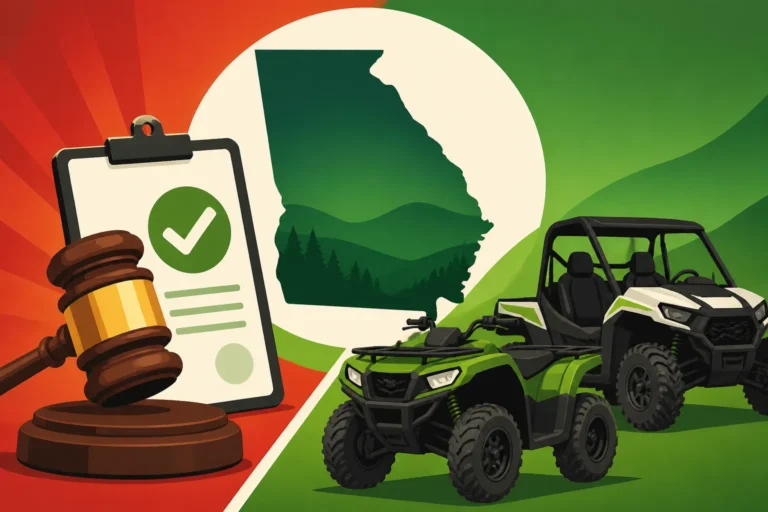
Let's cut through the confusion. When Georgia rolled out its MPOHV registration program, it wasn't specifically thinking about differentiating between a recreational rider and a farmer needing to move equipment. The law was designed to give certain types of off-highway vehicles limited access to county roads. This means that whether you're using your UTV to haul feed to the back forty or to head to your favorite hunting spot, the same set of rules applies if you want to put a license plate on it and drive it on public asphalt or dirt roads.
The Core Purpose of the MPOHV Registration
The entire point of Georgia's MPOHV registration is to create a pathway for specific, purpose-built off-highway vehicles to be legally operated on county roads. Before this system, it was a real grey area, leading to fines and confusion for many riders, including farmers. It's not about tracking every single machine in the state; it's about providing a clear framework for those who choose to venture off private property and onto the public road system. If your UTV or side-by-side meets the strict criteria, you can get a plate, insurance, and then confidently move your machine between properties or to the local store, all while adhering to the law.
This means you have to consider your machine against a very specific list of requirements. It's not enough that it's a utility vehicle; it needs to pass what's often referred to as the eight-point test, which covers everything from steering to width to gross vehicle weight. If your farm machine doesn't tick every one of those boxes, it won't qualify for an MPOHV plate, regardless of its primary use. We've got a whole article dedicated to this, so check out [Georgia MPOHV Eligibility: The Eight-Point Test] if you need a deep dive into those specifics.
Why Farm Use Isn't a Direct Exemption from MPOHV Rules
Here's where many farmers get caught in a bind: there isn't a specific "farm use" exemption that allows an otherwise ineligible ATV or UTV to bypass the MPOHV registration requirements if you intend to drive it on a public road. If your side-by-side is strictly confined to your own property, or leased land you have permission to ride, then MPOHV registration is completely unnecessary. In those scenarios, your machine is treated like any other piece of private property and doesn't need state oversight for road access. [Georgia ATV Rules on Private Property] provides more details on this.
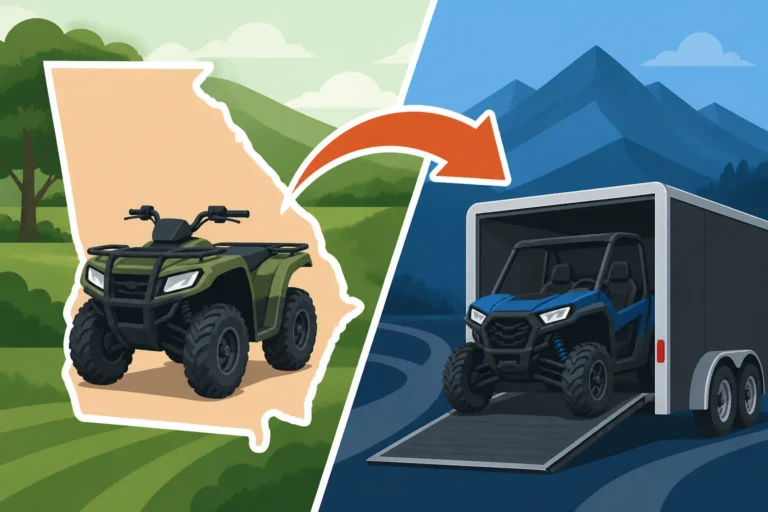
However, the moment those tires touch a county road—even if it's just to cross from one pasture to another—you're subject to Georgia's traffic laws. This is precisely why the MPOHV registration exists. It bridges that gap, allowing machines that wouldn't normally be street-legal to gain limited road access. So, if your farm operations require you to move your machine on public roads, you need to either ensure it meets the MPOHV criteria and register it, or find an alternative method of transport, like trailering it. Simply having "farm tags" or being a farmer doesn't automatically grant road-legal status to a non-compliant off-highway vehicle.
Navigating the Eligibility Requirements for Farm-Used Machines
For many farmers, their ATVs and UTVs are indispensable tools, but they often don't realize that these workhorses might not be designed for public road use. The Georgia MPOHV rules are very specific, and while many utility side-by-sides might seem like they'd fit, a close look at the details is necessary. It's about safety standards and vehicle classifications, not just what you use the machine for.
Key Eligibility Points to Consider for Farm Equipment
When you're looking at your trusty farm UTV or side-by-side and wondering if it can get an MPOHV plate, you really need to go through the checklist. One of the biggest hurdles for many machines is the seating arrangement. For instance, the MPOHV registration specifically requires a non-straddle seat. This immediately disqualifies most traditional ATVs, which are designed for a rider to straddle the engine. So, if your farm's quad is a regular ATV, it won't qualify, no matter how much you use it to check fences. For more on this, check out [Why Georgia's MPOHV Rules Demand a Non-Straddle Seat].
Beyond the seat, your machine must have a steering wheel, not handlebars. This is another deal-breaker for standard ATVs and many dirt bike-like utility vehicles. Then there are the physical dimensions and capabilities: it needs to be 80 inches or less in width, have a minimum payload capacity of 350 pounds, and a gross vehicle weight of 4,000 pounds or less. The speed requirements are also crucial: it must be capable of 25 mph but not exceed 65 mph. These are all critical details that can make or break your ability to register a farm machine. You can find more information on these specific measurements and requirements in articles like [Georgia Requires a Steering Wheel, Not Handlebars], [Measuring Width Against the 80-Inch Limit], and [Weighing a Machine Against the 4,000-Pound Limit]. These aren't just suggestions; they're hard rules that your county tag office will verify.
Documenting Ownership for a Farm Machine
Another area where farmers often face challenges with older or privately purchased machines is proving ownership. Since ATVs and UTVs in Georgia generally aren't titled like cars or trucks, you might not have a formal title document. This is especially true for farm equipment that has been passed down through generations or bought with a simple handshake and cash. However, to register an MPOHV, you still need to prove to the state that you are the legal owner. This often involves a solid bill of sale, even for a machine that's been on your farm for years.
If you don't have a formal bill of sale, the Georgia Department of Revenue has provisions for an Ownership Affidavit. This is a sworn statement where you detail how you came to own the machine, any previous owners you know of, and confirm that there are no liens against it. It's a critical piece of paperwork, and filling out [Georgia Form MV-OHV and What It Asks] accurately is essential. If you're creating a bill of sale or an affidavit yourself, resources like LawDepot can be helpful for generating legally sound documents that include all the necessary details to satisfy the tag office. Properly documenting your ownership is a non-negotiable step in the registration process, even if your machine has been an integral part of your farm for decades. We have a detailed guide on [Proving You Own an ATV in Georgia Without a Title] and [Georgia Ownership Affidavit for an MPOHV] that can walk you through this process.
Practical Considerations for Farmers and Ranchers
So, you've looked at your farm machine, checked the eligibility boxes, and now you're weighing the pros and cons of actually going through the MPOHV registration process. For farmers and ranchers, this isn't just about recreational convenience; it's about efficient operations and often, compliance. There are real costs and benefits to consider that directly impact your daily work.
The Cost-Benefit of Registering a Farm-Used MPOHV
Let's be realistic about the financial side. There is an annual registration fee for an MPOHV plate. While it's not exorbitant, it's still an expense that needs to be factored into your farm's budget. You can get an idea of the current cost by looking up [Georgia MPOHV Registration Cost]. For some farmers, the thought of paying yet another fee for equipment that's primarily used on private land might feel like an unnecessary burden. However, you need to weigh that cost against the alternative: trailering your side-by-side every time you need to cross a county road, even for a short distance.
Imagine needing to get from your main barn to a distant pasture, just a mile or two down a public road. Without registration, that short trip could result in a citation. Trailering takes time, requires another vehicle, and can be a significant hassle when you're busy with farm work. For many, the ability to legally drive their utility vehicle on those short stretches of county road makes the annual registration fee a small price to pay for the immense convenience and peace of mind. It allows you to operate your farm more efficiently, saving valuable time and effort that would otherwise be spent loading and unloading.
Insurance Implications for Farm Vehicles on Roads
Another critical component of MPOHV registration, and one that often catches people off guard, is the mandatory insurance requirement. If you intend to get an MPOHV plate, you absolutely must carry liability insurance. This isn't just a suggestion; it's a legal necessity. [Georgia Liability Insurance Tied to Registration] is a core part of being road-legal. While you might already have a general farm liability policy, or even specific insurance for your farm equipment, it's crucial to verify that it provides the necessary liability coverage for operating an MPOHV on public roads. Often, existing farm policies are designed for accidents on private property and might not meet the state's minimum requirements for public road use.
You'll need to contact your insurance provider and specifically ask about MPOHV coverage for public road operation. They can help you determine if your current policy extends to this or if you need to add a specific rider or a new policy. Failing to have the correct insurance could lead to problems, even if your machine is registered. Just like when driving a truck, an officer can ask to see proof of insurance for your MPOHV on a county road. Making sure you're properly covered not only protects you financially in case of an accident but also ensures you're fully compliant with Georgia law.
Alternative Solutions for Farm Operators
For some farmers, the MPOHV registration requirements might simply be too restrictive, or their machines might not meet the eligibility criteria. This doesn't mean you're out of options for using your ATVs and UTVs effectively on the farm. It just means you need to consider alternative strategies to keep your operations running smoothly without breaking any laws.
Private Land Use and Unregistered Machines
Let's reiterate a very important point: if your ATV or UTV is never going to touch a public road, then MPOHV registration is completely unnecessary. For many farms, the vast majority of machine operation happens on private land, leased pastures, or timber company tracts where you have explicit permission to ride. In these scenarios, the state doesn't require any form of registration for your off-highway vehicle. You can use your quad or side-by-side to haul equipment, check livestock, spread feed, or manage timber all day long without needing a license plate.
This approach simplifies things considerably. You avoid the registration fees, the insurance specific to public road use, and the hassle of ensuring your machine meets all the MPOHV eligibility points. It's a perfectly legal and viable option for countless farmers across Georgia. However, you must be absolutely certain that your activities will never involve operating the machine on a state, county, or municipal road. If there's even a slight chance you'll need to cross a road, then this "private land only" approach has limitations that could lead to issues. Remember, your property line is the hard boundary for this rule.
Using Tractors or Exempt Farm Equipment
Sometimes, the best solution isn't to force an ATV or UTV into a road-legal mold it wasn't designed for, but to use equipment that is already exempt or purpose-built for farm and road use. Tractors, for example, are generally considered farm equipment and have different rules regarding road travel. They often have specific exemptions that allow them to operate on public roads between fields or to transport farm products, usually requiring slower speeds, proper lighting, and "slow-moving vehicle" signage. If you're consistently needing to move heavy loads or navigate public roads for agricultural purposes, a tractor or a larger, purpose-built agricultural vehicle might be a more suitable and legally compliant solution than trying to register a consumer-grade UTV as an MPOHV.
These traditional farm vehicles are designed with different safety standards and legal classifications in mind, which typically accommodate their unique role in agriculture. While a UTV offers speed and maneuverability that a tractor might not, understanding the distinct legal frameworks for each type of equipment can help you make the most compliant and practical choices for your specific farming needs. It's about matching the right tool to the job and its associated legal framework, rather than bending the rules for a machine that doesn't quite fit the MPOHV criteria.
Here's a quick comparison of common farm vehicles and their typical MPOHV eligibility:
| Feature/Requirement | Typical Farm ATV (Quad) | Typical Farm UTV (Side-by-Side) | MPOHV Eligibility Status | Notes |
|---|---|---|---|---|
| Seat Type | Straddle seat | Non-straddle bench or bucket seats | ATVs generally fail | Why a Straddle Seat Disqualifies a Machine is a key MPOHV rule. |
| Steering Control | Handlebars | Steering wheel | ATVs generally fail | Why Handlebars Disqualify a Machine for MPOHV registration. |
| Width (max 80") | Usually under 80" | Often under 80", but some heavy-duty UTVs can exceed | Usually passes | Wider machines need careful measurement. |
| Payload (min 350 lbs) | Varies, many utility models pass | Most utility UTVs pass | Usually passes | Important for carrying tools and feed. |
| Gross Weight (max 4000 lbs) | Usually under 4000 lbs | Many utility UTVs pass | Usually passes | Larger UTVs should be weighed. [Weighing a Machine Against the 4,000-Pound Limit] |
| Speed (25-65 mph) | Most utility ATVs fall within range | Most utility UTVs fall within range | Usually passes | Check manufacturer specs. |
| Seat Belts | Not typically required or installed | Factory-installed seat belts are common | UTVs often pass | Factory Seat Belts and the Eligibility Check |
| Headlights/Brake Lights/Mirrors | Standard on most machines, but mirrors may be aftermarket | Standard on most machines, mirrors often factory | Usually passes | Must be present and functional for MPOHV. |
This article is for general informational purposes only and does not constitute professional advice. Laws, prices and regulations vary by location and change over time. Consult a qualified professional for guidance on your specific situation.